Course overview
Accredited Foundation year Integrated masters Work placement
You develop knowledge and skills in subjects including structures, construction materials, geotechnics, fluid mechanics and construction management.
The next few decades promise to be exciting for civil engineers, with progressive urbanisation, increasing populations, ongoing economic development, climate change and the risk of extreme events presenting many threats to infrastructure. You learn the skills to tackle these challenges, making you a highly sought after engineer.
Top reasons to study civil engineering at Teesside:
- Nationally recognised: Teesside University is ranked the top North East University for Civil Engineering in the Guardian University Guide 2026. (53 institutions ranked, tees.ac.uk/source).
- Employability: 100% of BEng (Hons) Civil Engineering students agreed that the course has developed knowledge and skills needed for the future (National Student Survey 2025, teesside.ac.uk/source).
- Financial awards: you may be eligible for a number of scholarships and awards.
- International visits: you have opportunities to travel internationally through student mobility visits or spending a semester studying abroad with one of our partners in countries such as China, the Czech Republic, Spain and Malaysia.
- Prepare for your studies: develop your understanding in maths with our free online Mathematics for University course.
- Graduate success: 100% of BEng (Hons) Civil Engineering students go on to work and/or study 15 months after the course (Graduate Outcomes survey 2020-21, tees.ac.uk/source).
Course details
Course structure
Year 1 core modules
This module introduces the range of mathematical skills that are relevant to an engineering degree. You revisit and develop your knowledge of the fundamentals of algebra, trigonometry and basic statistics. The central ideas of vectors, matrices, complex numbers, and differential and integral calculus are also examined.
Throughout the module you develop a range of mathematical skills and techniques fundamental to the solution of engineering problems. You also advance your skills in selecting and applying mathematical techniques.
This module is delivered through a combination of lectures and tutorial sessions.
Group Project - Feasibility Stage
You work in project teams to produce a design for a client in the construction industry. You are expected to commence the development of essential design and employability skills needed in a professional setting, such as problem-solving, time management and presentation in a technical context.
Introduction to Geotechnics and Surveying
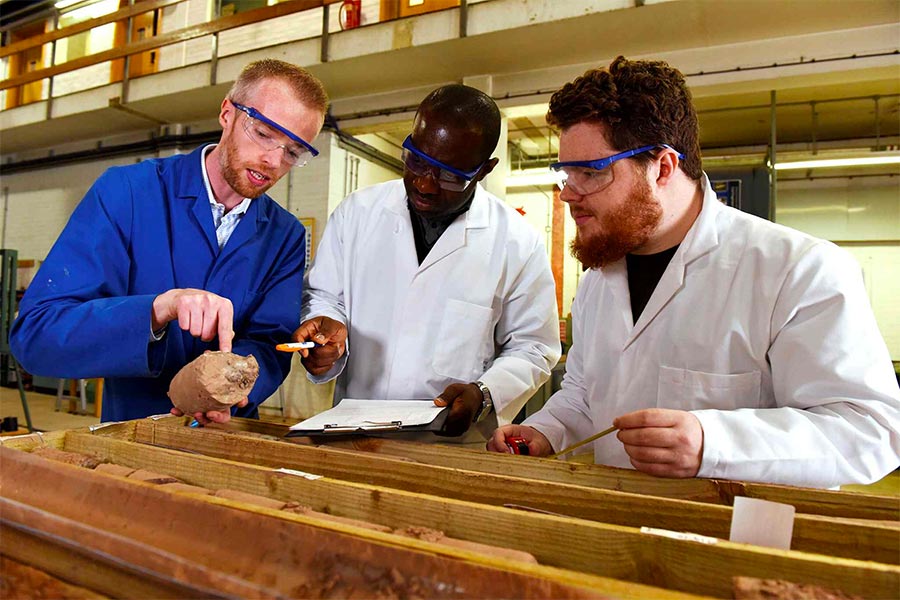
You explore the importance of geological processes and the properties of soils and rocks in civil engineering. You perform laboratory practical’s in soil and rock description and geological map interpretation. You learn about instrumentation and observation procedures used in modern engineering surveying practice and learn how to measure large objects in three-dimensional space using various techniques and equipment and identify the associated errors.
You look at engineering materials in lab-based practical sessions. Fundamental relationships between processing, structure, properties and performance are explored to highlight factors which influence the suitability of materials for various engineering applications.
Principles of Civil Engineering Construction
You will develop knowledge and understanding of commonly utilised construction methods and components associated with civil engineering construction activities. Teaching sessions explore construction methods and components for the foundations. You then building on this knowledge of house construction and apply it to larger substructure and superstructure civil engineer-ing construction activities, including ground remediation, deep basements, retaining walls, multi-storey structures and bridges.
Lectures and multimedia are used to introduce basic concepts on building construction and services. Video and digital photo-graphs will be used to show examples of site practice. The module assessment includes undertaking a condition survey of a building and produce a technical report/drawing.
This module introduces common types of structure used in engineering, assesses the types of loads they must resist and provides you with the analytical skills necessary to design the components that make up the structure.
Specific areas of study include: basic concepts of force, stress and strain; properties of materials and sections; analysis of frames, beams and columns; equilibrium conditions and statical determinacy; beam bending movement, shear force and deflection; and lightweight cables.
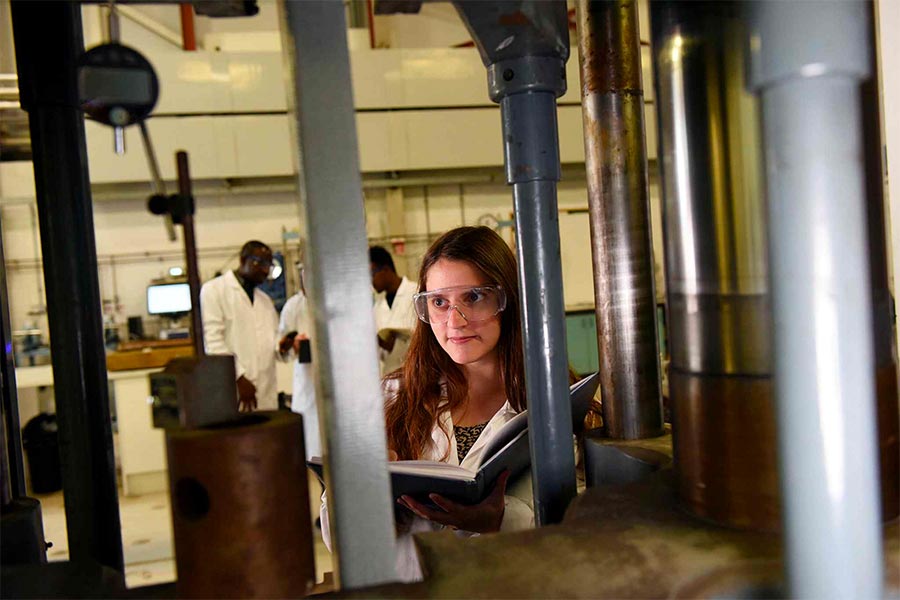
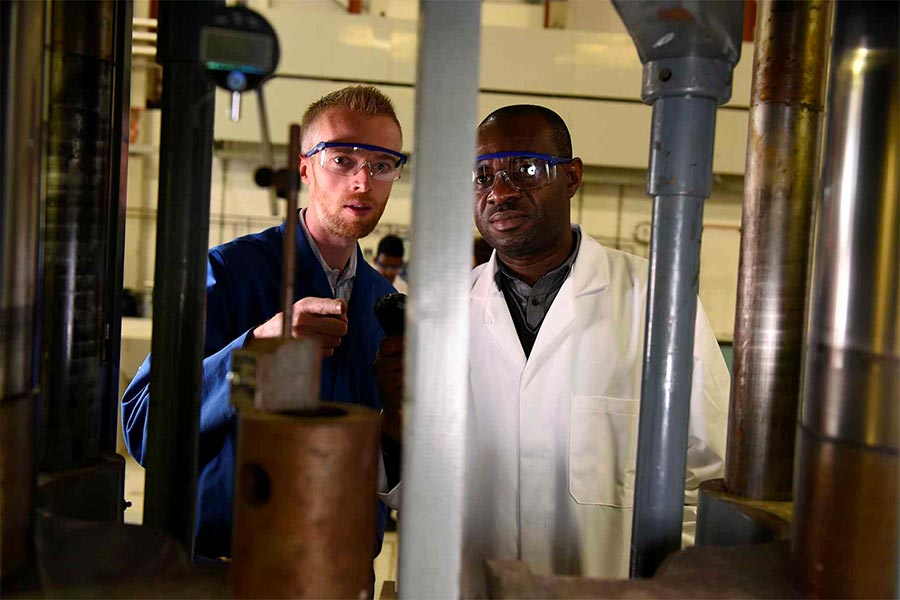
Lectures will introduce each major topic on the module with tutorials used to practise calculations. Laboratory practicals are used to investigate the properties of construction materials and develop a deeper understanding of structural theory.
The module is assessed by in-course assignment and an examination, comprising calculations and short answer questions on the module indicative content.
Year 2 core modules
You develop mathematical knowledge in differential equations and numerical methods and extend your base of techniques to solve a variety of problems which arise in engineering domains. The emphasis is on developing competence in the identification of the most appropriate method to solve a given problem and its subsequent application.
Construction Management and Professional Skills
Students will gain an understanding of construction management techniques relevant to the construction projects at design and production stages with regards to scheduling, estimating, cost and time control, quality issues and health & safety. Students will also learn how these principles may be applied in the management of a construction project.
Formal lectures will be supported by student led seminars as appropriate in order to provide formative feedback with regards to construction management components. Students will also develop professional skills to support students’ development with regards to employability and career progression. The learning and teaching strategy will also focus on developing the students' detailed understanding and interpretation of the requirements for chartered membership of an engineering professional body.
This module further develops your understanding of earth materials and their impact on civil engineering. You will analyse soils and examine how they interact with structures and how they behave under load.
The module will also extend your knowledge of construction materials to include Bituminous materials, Glass, Plastics, Non-ferrous metals, Composites, Smart and Energy-saving materials. These materials will be discussed with respect to their engineering properties and selection criteria for the design and construction of civil engineering structures.
Group Project - Conceptual Design Stage
This module provides you with the opportunity to work in teams in order to solve an open-ended employer relevant problem on various areas of the infrastructure required by today’s society. You develop employability skills such as project management, presentation of work, research and commercial awareness in order to support problem solving in a technical engineering context.
The module further helps you to develop a holistic approach to the engineering practice and become critical of the potential impacts of the design and construction of engineering artefacts. You are expected to integrate environmental, social and economic considerations, as well as health and safety concepts, in your project proposals.
It also provides an opportunity for you to apply some of the construction management principles and techniques you learn in the Construction Management module to a typical civil engineering project.
A problem based learning approach is adopted and, where appropriate, supporting lectures / seminars will be delivered to include technical knowledge or skills development. You are assessed through two in-course assignments.
This is a 20-credit module.
The basic properties of water at rest and in motion are introduced and used to investigate problems related to the storage of water in bulk and to its conveyance in known quantities through pipelines, rivers and open channels. Consideration is given to the natural water cycle (hydrological cycle) and how man has interacted with it to produce the hydrosocial cycle for his own use and benefit. Rainfall is a major component of the hydrological cycle and the module gives an insight into rainfall types, rainfall losses and rainfall runoff. Water and wastewater treatment are introduced.
Structural Analysis and Design
The module will develop your ability to analyse structures and produce designs. You will extend your knowledge to solve elastic statically indeterminate systems and learn how to design common structural elements in accordance to appropriate National and European Standards.
Optional work placement year
You have the option to spend one year in industry learning and developing your skills. We encourage and support you with applying for a placement, job hunting and networking.
You gain experience favoured by graduate recruiters and develop your technical skillset. You also obtain the transferable skills required in any professional environment, including communication, negotiation, teamwork, leadership, organisation, confidence, self-reliance, problem-solving, being able to work under pressure, and commercial awareness.
Many employers view a placement as a year-long interview, therefore placements are increasingly becoming an essential part of an organisation's pre-selection strategy in their graduate recruitment process. Benefits include:
· improved job prospects
· enhanced employment skills and improved career progression opportunities
· a higher starting salary than your full-time counterparts
· a better degree classification
· a richer CV
· a year's salary before completing your degree
· experience of workplace culture
· the opportunity to design and base your final-year project within a working environment.
If you are unable to secure a work placement with an employer, then you simply continue on a course without the work placement.
Final-year core modules
Digital Information Management in Construction
Develop the knowledge and skills to become an information manager, or BIM manager in your future career. You study the methodologies to manage digital BIM based projects for the construction and engineering fields, learning how to create, manage and encourage other users to work within the BIM collaboration space.
In this module the design process is examined together with the various techniques used in practice. The concepts and methods are applied to a variety of foundation types. The interaction of the structural forces with the ground is considered in addition to the design of ground support and associated earthworks. Lectures will be used to outline the concepts and techniques augmented with in class discussion/seminars of case studies. Seminars and assignments will be used by the students to gain skills in applying the techniques to designs. Assessment will be in the form of a design report (30%) and an examination (70%).
This module extends the development of independent learning skills by allowing you to investigate an area of engineering or technology for an extended period.
You receive training in writing technical reports for knowledgeable readers and you produce a report or dissertation of the work covered. In addition, you give an oral presentation, a poster presentation or both. The topic can be in the form of a research project or a design project.
You develop key skills in research, knowledge application and creation through keynote lectures where appropriate and self-managed independent study. Support is provided through regular tutorial sessions.
Structural Design and Materials
The module develops the structural engineering application of analysis and design concepts and procedures in a range of materials to provide the student with the knowledge required to carry out the design of structural elements and systems. Appropriate European and/or National Standards will be used for the design of structural components of different materials.
Building on the detailed knowledge of construction materials developed in previous modules, students will gain an appreciation of several of the more significant recent changes in the fields of metals and alloys, concrete technology and cement-based composites. Development of new and emerging materials will be explored, including responses to concerns regarding service lifetimes, durability and sustainability.
The module considers elements of flood risk management, water resources management and natural and man-made infrastructure. It introduces natural watercourses and concepts of their response to rainfall events, including flooding and consideration of flood protection/mitigation methods. The module develops the concepts involved in the design and operation of elements of water supply and wastewater systems, from the estimation of water demand and the evaluation and use of water resources, to the collection and transport of foul and storm water and their eventual discharge to natural watercourses.
The module will also consider climate change and mitigation in relation to water.
Module content is delivered via lectures, seminars and practical sessions.
Modules offered may vary.
How you learn
You learn through lectures, seminars and hands-on lab sessions. You are also expected to undertake self-guided study time to review lecture notes, prepare coursework assignments, work on projects and revise for assessments.
The group projects in the first two years of your course involve a compulsory one-week block delivery period. These intensive problem-solving weeks involve you working as part of a team to find a solution to an engineering problem, helping you enhance your team-working and other transferrable skills.
How you are assessed
You are assessed through coursework assignments, project reports, lab reports, presentations and formal exams.
Our Disability Services team provide an inclusive and empowering learning environment and have specialist staff to support disabled students access any additional tailored resources needed. If you have a specific learning difficulty, mental health condition, autism, sensory impairment, chronic health condition or any other disability please contact a Disability Services as early as possible.
Find out more about our disability services
Find out more about financial support
Find out more about our course related costs
Entry requirements
Entry requirements
96-112 points including maths, from any combination of acceptable Level 3 qualifications. Examples include A-level, BTEC, Access to HE Diplomas, Scottish and Irish Highers, T-Level, or the International Baccalaureate.
We accept the following T-Levels:
- Design and Development for Engineering and Manufacturing
- Design, Surveying and Planning for Construction (specialism Civil Engineering)
- Maintenance, Installation and Repair for Engineering and Manufacturing from City & Guilds.
Find out how many points your qualifications are worth using the UCAS tariff calculator.
Accredited prior learning
If you’ve already completed an HNC, HND, or other relevant higher education study in a related subject, you may be able to use this to gain credit exemptions or advanced entry. This means you could build on your previous study and avoid repeating content you’ve already covered.
Alternative routes into this course are available if you have not met the entry requirements as listed.
International students who need a student visa to study in the UK should check our international web pages on acceptable international qualifications and UKVI-compliant English language requirements.
For general information please see our overview of entry requirements.
International applicants can find out what qualifications they need by visiting our international country pages.
You can gain considerable knowledge from work, volunteering and life. Under recognition of prior learning (RPL) you may be awarded credit for this which can be credited towards the course you want to study.
Find out more about RPL
Employability
Career opportunities
Typical civil engineering roles include construction project management, building/civil engineering for contractors or consultants, architectural practices, local authorities or government agencies.
Our graduates are employed by companies such as Aker Solutions, Amey, Atkins Global, Arup, Bauer, Interserve, Jacobs, WSP Group, Turner & Townsend, and a number of city and borough Councils including York, Bradford and Stockton-on-Tees.
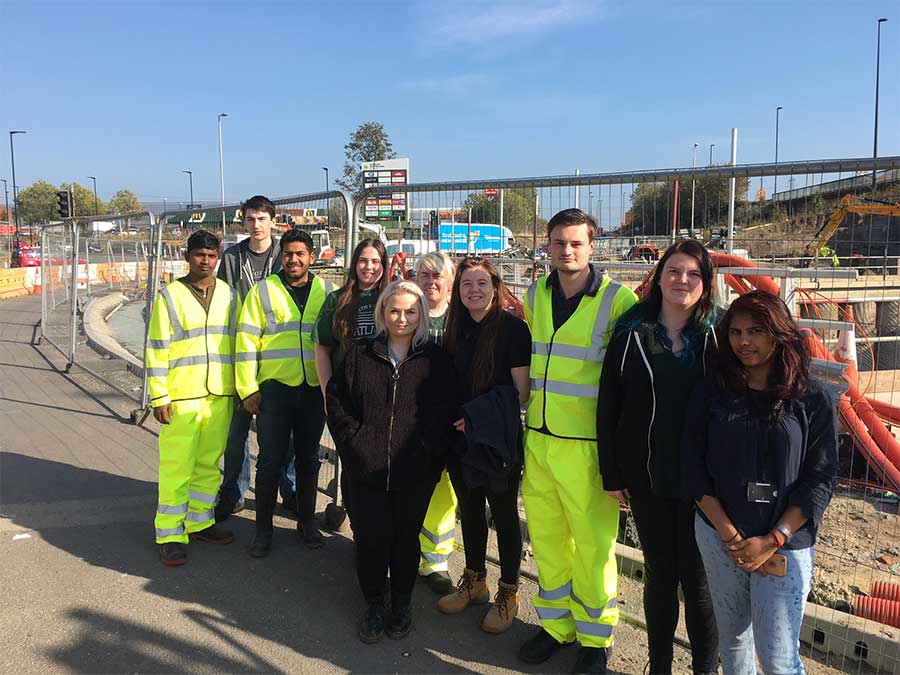
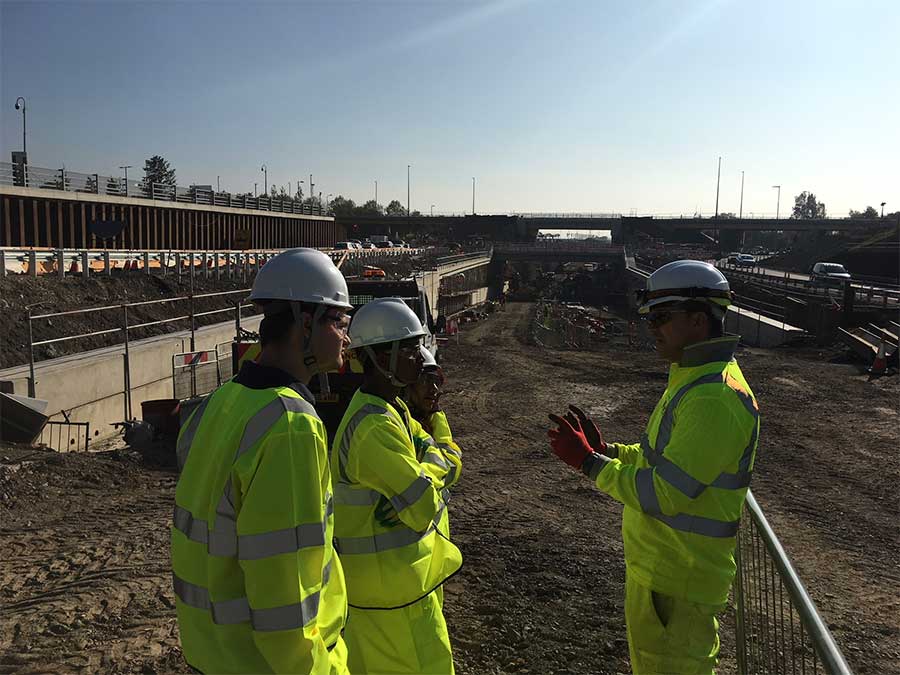
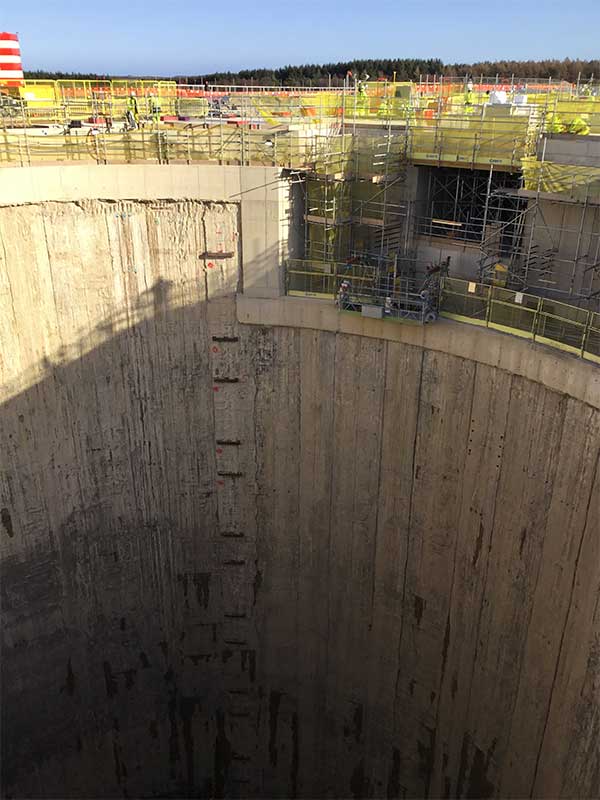
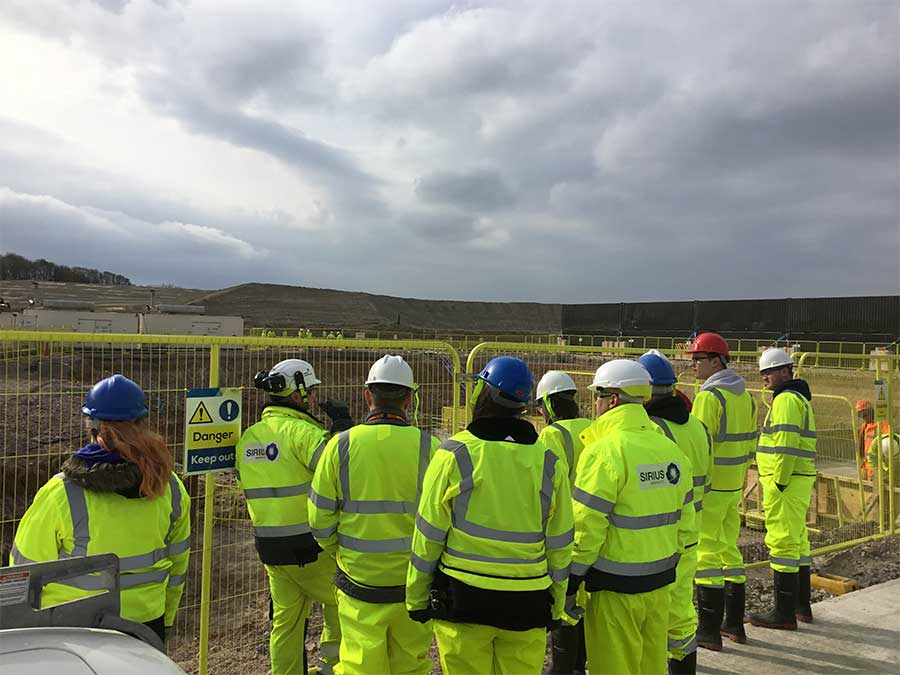
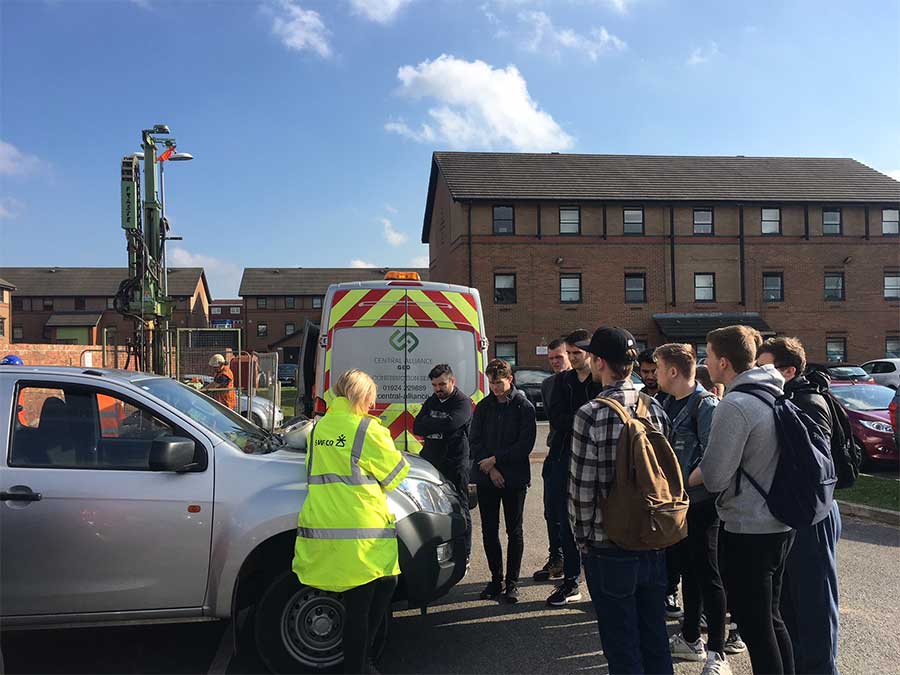
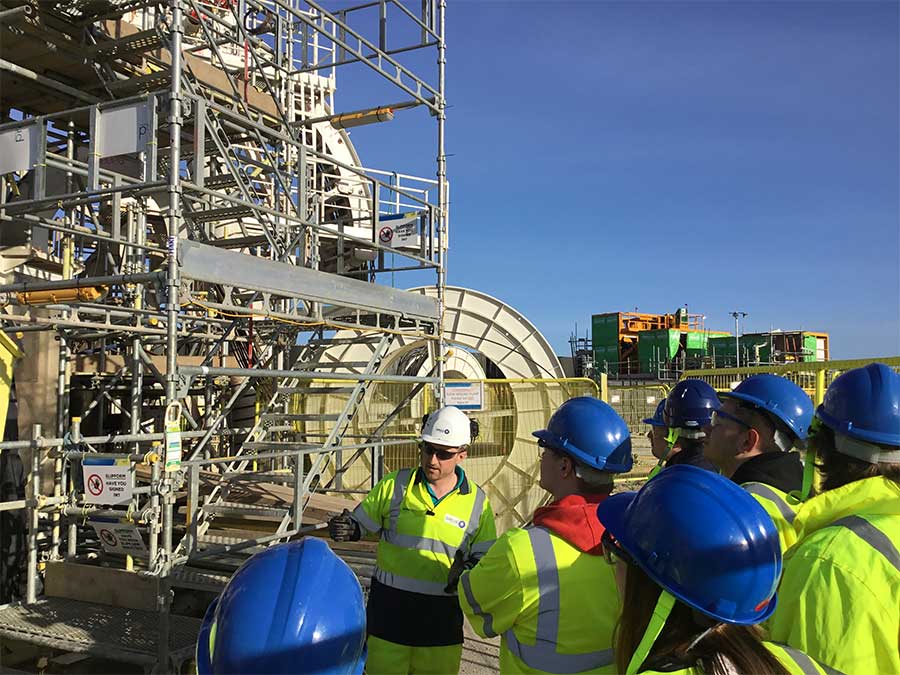
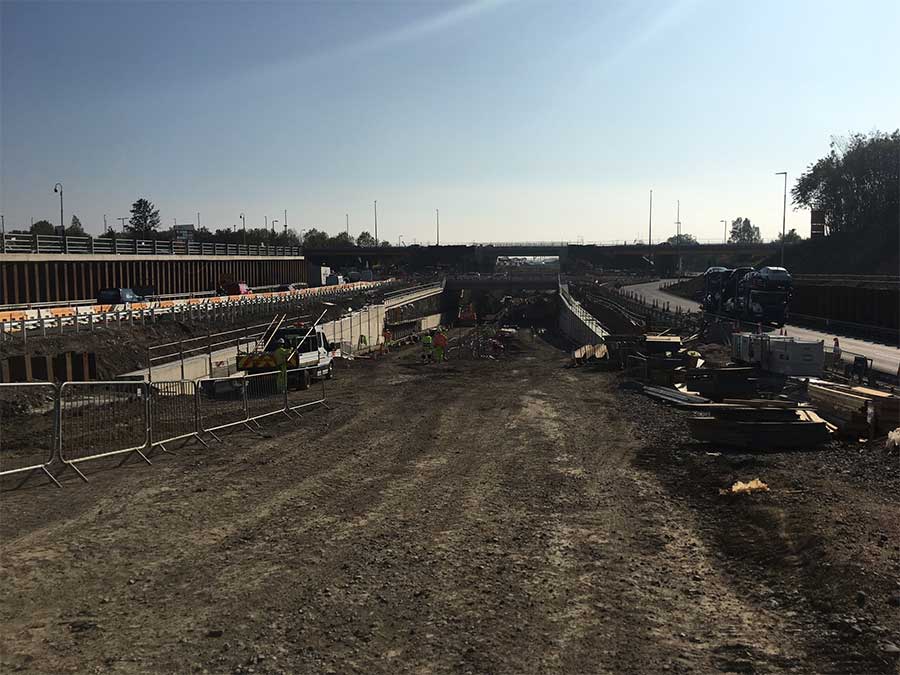
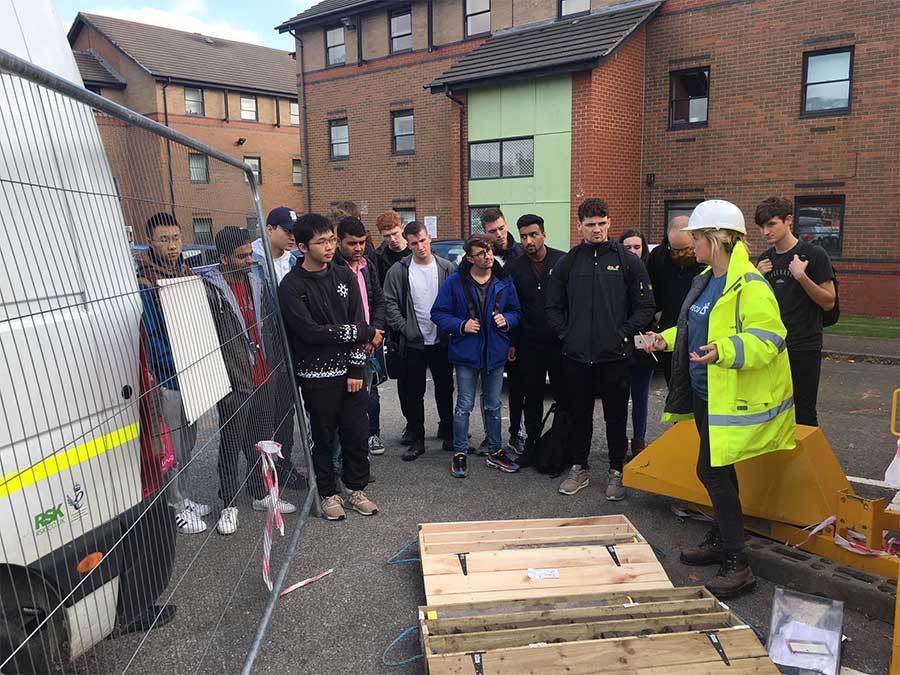
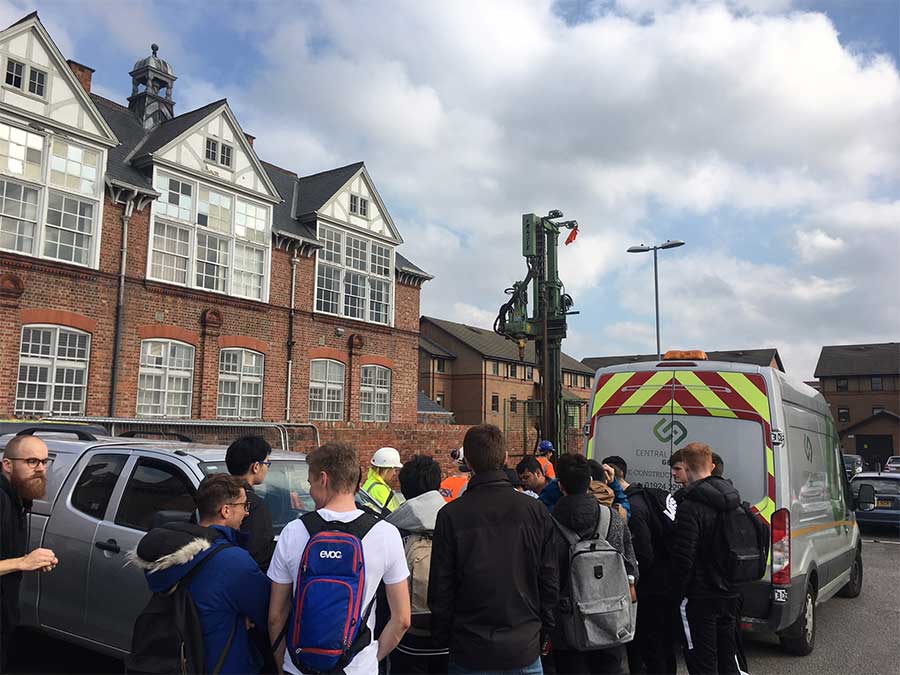
You gain practical industry experience through site visits and fieldwork, preparing you for the world of work. Recent students have visited mines and bridge construction sites.
Our Student Futures careers and employability team can help you map out your future career.
Teesside University is an Academic Partner of the Institution of Civil Engineers (ICE), so you will benefit from the support and networks of the ICE. The ICE has more than 95,000 members in 155 countries and you will have the opportunity to raise your student profile and boost your employability prospects while completing your degree.
Working as a civil engineer.
Information for international applicants
Qualifications
International applicants - find out what qualifications you need by selecting your country below.
Select your country:
Useful information
Visit our international pages for useful information for non-UK students and applicants.









 BEng (Hons) Civil Engineering
 BEng (Hons) Civil Engineering
  BEng (Hons) Civil Engineering
 Forward-thinking degree apprenticeship graduate wins prestigious engineering award
 Eco-conscious engineering graduate wins Transporter Bridge Award
 Engineering graduate receives Transporter Bridge Award