Landmark report highlights inequalities facing minority ethnic women
Minority ethnic women in the North face a lifetime of inequalities that stretch from childhood and maternity care to employment, mental health and later life, according to a new report co-led by a Teesside University academic.
Key findings include:
• Black and Asian people are twice as likely to be in poverty than white people, with over three times as many experiencing persistent poverty
• Minority ethnic women in the North report substantially lower levels of good health than those in the South and London
• Almost one in five (18.1 percent) minority ethnic women in the North have a long-lasting limiting illness, compared to 14.2 percent in the South and 15.8 percent in London. These conditions include cardiovascular disease, stroke, renal disease, some cancers, and poorer mental health outcomes
• The risk of obesity-related diseases among Bangladeshi women was three times higher for women living in the North than those living in London
• There are significant ethnic inequalities in severe mental illness and Schizophrenia, with minority ethnic women are two to six times more likely than white women to be diagnosed with non-affective psychosis
• Significant ethnic inequalities persist in access to and treatment for mental health problems, with barriers including limited trust, culturally insensitive services and delayed diagnosis
• Women from minority ethnic groups are more likely to have cancer diagnosed at a late stage. Women from African, Caribbean and Asian ethnicity have higher odds of being diagnosed late with breast cancer and ovarian cancer
• Older minority ethnic people are 3.81 times more likely to experience loneliness than their white British peers
• 45 percent of minority ethnic women report having experienced online abuse, and technology is increasingly documented as a coercive tool deployed within honour-based or community-monitoring contexts
• Women from minority ethnic groups are more likely to be arrested, serve longer sentences and receive disparate treatment in Magistrates’ Court decisions including pleas and remand decisions, compared to white people.
However, data shows that, despite the health challenges and barriers minority ethnic women face, they have higher life expectancy levels than white people (83.1 years). For Asian women, life expectancy is 86.9 years, 87.3 years for Bangladeshi women, 88.9 years for Black African women, 84.6 years for Black Caribbean and 86.9 years for other minority ethnic groups.
The report highlights the exceptional work already being led by voluntary, community, faith, and social enterprise organisations to challenge inequalities, build trust and provide culturally responsive support. However, it makes clear that sustained funding, stronger partnerships and system-wide backing are essential to match their commitment of such organisations and enable their expertise to deliver lasting change.
The new report is the first in a series on Woman of the North reports, and follows the flagship report released in 2024, which showed how northern women live shorter lives, work more hours for less pay, are more likely to be an unpaid carer, and more likely to live in poverty than women in other regions of England.
Without tackling the deep-rooted poverty and allocating resources matched to the needs in the North, it will be difficult to improve lives and health of minority ethnic women and also build stronger, more trusting relationships between different ethnic groups
The report calls for co-ordinated action from government, regional leaders and the NHS, backed by shared accountability, sustained investment and stronger community engagement, to deliver lasting improvements for minority ethnic women. It urges policymakers and public services to improve the collection and use of detailed ethnicity data so hidden inequalities can be identified and addressed, while ensuring minority ethnic women are involved in designing, delivering and evaluating the policies and services that affect their lives.
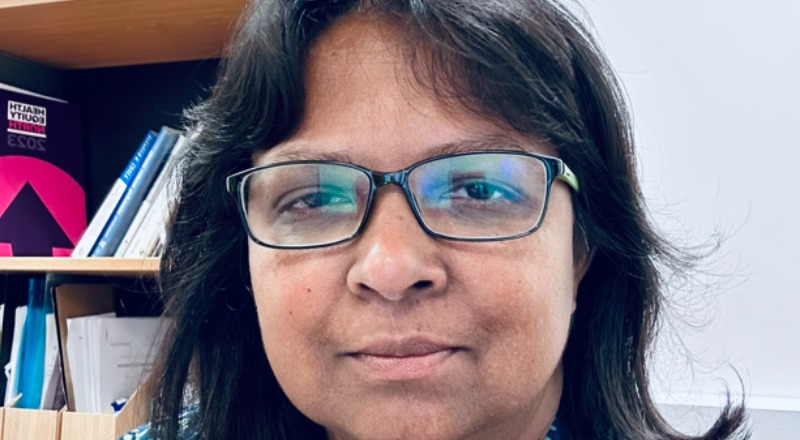
Dr Nasima Akhter, Associate Professor of Public Health in Teesside University’s School of Health and Life Sciences and Associate Member of Fuse, the Centre for Translational Research in Public Health and co-lead report author, said: “Our report highlights that persistent poverty and underinvestment in the North continue to undermine women's quality of life, deepen ethnic inequalities, and fuel mistrust and divisions rather than fostering positive relationships between ethnic groups.
“These inequalities are not confined to one part of women’s lives: they extend from childhood, maternity and mental health to employment, housing, violence and the justice system.
“Disadvantages can accumulate across the life course, creating poorer outcomes for women, and future generations. Yet major gaps in detailed ethnicity data and research continue to hide the true scale and regional pattern of these inequalities. Better evidence, transparent monitoring and clear accountability are essential if public services are to identify where need is greatest, target support effectively and track whether action is genuinely improving women’s lives.
“Without tackling the deep-rooted poverty and allocating resources matched to the needs in the North, it will be difficult to improve lives and health of minority ethnic women and also build stronger, more trusting relationships between different ethnic groups."
Dr Oluwaseun Esan, Lecturer in Public Health at the University of Liverpool and co-lead report author, said: “Our research found that minority ethnic women living in the North are from diverse backgrounds and not a monolithic group. Despite the structural inequalities of decades of underinvestment in the North, gender, and racial discrimination they experience, they effectively organise themselves within their local communities and often in mixed ethnic group settings. These trusted relationships sometimes help to navigate financial hardship, transport problems, poor communication and culturally insensitive services where statutory services have not effectively reached minority ethnic women.”
Hannah Davies, Executive Director of Health Equity North and CEO of the Northern Health Science Alliance, said: “This report paints a difficult picture for the health of women from minority ethnic groups in the North of England across the life course.
“Our recommendations include sustained investment, shared accountability and coordinated action across government, community groups and the NHS to scale what works and deliver lasting improvement - because we know change is possible.
"Interventions such as the Government's announcement that the NHS will take a public health approach to violence against women and girls is a significant step. This is particularly important for minority ethnic women, who may face culturally specific abuse and additional barriers.
“Health Equity North brings together academics from across the region to highlight research taking place, where there are gaps – for example in data collection - and to work to drive system change and we will work with those across health, public service and communities to help facilitate that change."
Latest articles
 Teesside University strengthens global healthcare education
...
 Trans National Education partners celebrate graduation
 Teesside University shortlisted for national teacher
...
Most read
- Vice-Chancellor honoured with Inspirational Leader Award
- Celebrating student success with global partner
- Honours for esteemed trio at Teesside University
- New five-star QS rating for Teesside University
- Businesses invited to bid for share of £30m Clean Energy Innovation Fund