Fuse supports national coalition calling for energy drinks ban for children
Research from Fuse, the Centre for Translational Research in Public Health, has been instrumental in evidencing the harmful impacts of energy drinks on children and now underpins calls from a national coalition for the Government to deliver its long-promised ban on sales to under-16s.

To mark 700 days since the Government pledged in the 2024 King’s Speech to introduce restrictions on high-caffeine energy drinks, a coalition including celebrity chef Jamie Oliver and leading health organisations, academics, youth campaigners - Bite Back, Sustain: the alliance for better food and farming, Action on Salt & Sugar, the British Dental Association, and the Association of Directors of Public Health - has issued an open letter warning that continued inaction is putting children’s health, wellbeing and learning at risk.
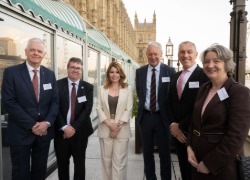
Professor Amelia Lake, Deputy Director of Fuse, The Centre for Translational Research in Public Health, and Professor of Public Health Nutrition at Teesside University, is among those adding her voice to the call for urgent action.
She said: “The international evidence is clear; drinking energy drinks is associated with both poor physical and mental health outcomes in children as well as poor educational attainment.
“Our recent research shows these drinks are widely available to children, particularly from smaller shops and online. Speaking with children we know that marketing and branding play a powerful role in influencing young people's purchasing decisions.”
Professor Lake’s contribution reflects nearly a decade of research from Fuse, which has played a key role in building the evidence base linking energy drink consumption to disrupted sleep, increased anxiety, poorer concentration and reduced educational outcomes.
The work includes a major review examining 57 studies involving over 1.2 million children and young people across 21 countries, consistently demonstrating the negative impacts of these products on both physical and mental health.
This and previous research suggest that:
- Around 100,000 children drink at least one high caffeine energy drink every day and there is growing concern among parents and teachers about the impact on children’s health and education.
- Up to one third of children aged 13 to 16 years, and nearly a quarter of children aged 11 to 12 years consume one or more of these drinks each week.
- There is growing evidence linking these drinks to harmful effects on children, including increased frequency of headaches, irritation, tiredness and stomach aches; reduced sleep duration and quality; and increased risk of emotional difficulties, such as stress, anxiety and depression.
- Children from more deprived communities are more likely to consume these products, meaning a ban would support reducing health inequalities.
Our research has shown the significant mental and physical health consequences of children drinking energy drinks
While many major supermarkets have introduced voluntary restrictions, Fuse research shows that children can still easily purchase these products from smaller shops and online retailers. The coalition warns that this continued availability is having real consequences in classrooms and for children’s wellbeing, particularly during key periods such as exams when sleep, focus and mental health are critical.
Campaigners point to overwhelming support for action, with around eight in ten parents backing restrictions and retailers themselves calling for regulation to create a level playing field.
Professor Lake has contributed to national policy discussions on the issue, providing evidence to decision-makers. Her involvement in this coalition reinforces the strength and consistency of the academic evidence. She added: “Our research has shown the significant mental and physical health consequences of children drinking energy drinks. These drinks have no place in the diets of children.
“We know they are embedded in youth culture and linked to gaming, sport and music, but there is a lack of clear signalling about their health consequences.”
The Government has previously consulted on proposals to restrict sales, with strong public support for action from parents, teachers and health professionals. Internationally, several countries have already introduced age restrictions, while others are moving forward with similar policies.
Professor Lake highlights that 700 days on from the original pledge, the coalition members are calling for legislation to be introduced without further delay, adding that in that time, an estimated 280 million energy drinks have been sold - around 300 per minute, or five every second, despite labels warning they are 'not suitable for children'.
Latest articles
 Fuse supports national coalition calling for energy drinks
...
Fuse supports national coalition calling for energy drinks
... North East universities and North East Mayor launch £22.5m
...
North East universities and North East Mayor launch £22.5m
... Teesside University recognised as national leader for social
...
Teesside University recognised as national leader for social
...Most read
- Teesside University appoints next Vice-Chancellor and Chief Executive
- Steph McGovern launches new Teesside University scholarship to support women in engineering
- Movie visual effects Oscar nomination for Teesside University graduate
- Tees Valley at the centre of multimillion-pound clean energy programme shaped by Teesside University
- Vice-Chancellor honoured with Inspirational Leader Award