RSPB and Teesside University researcher partner on project to boost bird populations
A Teesside University researcher is working with the Royal Society for the Protection of Birds (RSPB) on a project looking at how rewilding can support abundant and diverse birdlife.
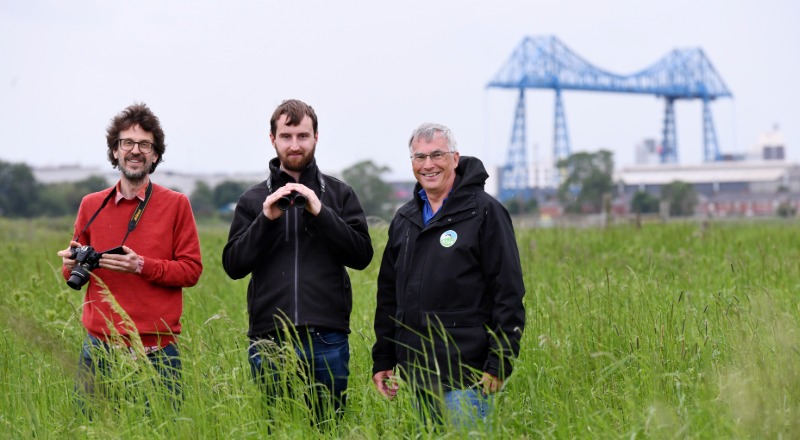
The four-year project, a collaboration between the conservation team at RSPB Salthome nature reserve and PhD researcher Ed Hearn, will examine how rewilding can reverse bird declines and shape future conservation work across the UK.
Rewilding is a land management technique that has appeared over the last twenty years, restoring natural processes and allowing land and nature to recover. This new project on Teesside aims to help inform rewilding projects right across the UK, contributing to nature recovery targets set by the UK government.
The work will aim to make the soils more suitable for delicate wildflowers, native species such as Bird’s-foot Trefoil, Common Rock-Rose and Bee Orchid. The research team hope the project will help to create thriving habitats for red-listed birds including Yellow Wagtails and Skylarks, while boosting biodiversity with minimal human intervention.
Working closely with the RSPB Saltholme team, with support from academic staff at Teesside University, Ed will study habitat change and biodiversity across the site, involving drone surveys to monitor how habitats develop over time, alongside structured surveys of plants, insects and birdlife.
Ed, 26, from Nottingham, said: “I’m excited to help make a genuine difference for nature recovery, improving our understanding of wildlife conservation techniques. There could be huge economic benefits too if we can give our birds the best habitats without intensive intervention. Sadly, many bird species are in decline, and I hope this study will help local wildlife on Teesside as well as offer guidance for best practice across the UK.
“I’m looking forward to getting stuck in with hands-on conservation, as well as the academic research. If, in several years’ time, Red listed Yellow Wagtails are starting to recover, more Short-eared Owls are hunting for shrews, voles and mice over Wild Saltholme and the skies are alive with the song of Skylarks, I’ll be immensely proud of our work here.”
It is a fantastic opportunity for the University and the RSPB to work closely together, delivering applied science that contributes to the nature positive agenda
Funded through a partnership between Teesside University and RSPB Saltholme, the studentship honours the legacy of renowned late ornithologist and Teesside resident James Denis Summers-Smith, whose life-long study of House Sparrows and passion for birds inspired generations of conservationists.
Denis Summers-Smith studied physics and engineering and then progressed his career into researching birds; so, having studied Maths at Durham University, and then finding his love of conservation through three years of volunteering with wildlife charities, Ed feels that his pathway is similar.
Ed added, “I’m keen to inspire our next generation of conservationists and hope anyone who wants to choose this career path can see that it’s never too late to change track. The volunteering placements I undertook have inspired me to change my career path, as well as teaching me the skills I need to make a meaningful contribution to nature.”
Dr Ambroise Baker, Senior Lecturer in Ecology in the University’s School of Health & Life Sciences and University Supervisor for the project, said: “Summers-Smith was keen to give young scientists the opportunity to make a difference through research, and this studentship reflects that vision perfectly. It is also a fantastic opportunity for the University and the RSPB to work closely together, delivering applied science that contributes to the nature positive agenda.”
Chris Francis, Senior Manager at RSPB Saltholme, said: “The late J Denis Summers-Smith was a passionate bird lover and scientist who became increasingly interested in understanding why House Sparrows and birds in general were declining during what we now call the biodiversity crisis. It’s exciting to see Ed follow in his footsteps, beginning what we hope will be a lifelong career in conservation.”
Latest articles
 RSPB and Teesside University researcher partner on project
...
RSPB and Teesside University researcher partner on project
... Fuse supports national coalition calling for energy drinks
...
Fuse supports national coalition calling for energy drinks
... North East universities and North East Mayor launch £22.5m
...
North East universities and North East Mayor launch £22.5m
...Most read
- Teesside University appoints next Vice-Chancellor and Chief Executive
- Steph McGovern launches new Teesside University scholarship to support women in engineering
- Movie visual effects Oscar nomination for Teesside University graduate
- Tees Valley at the centre of multimillion-pound clean energy programme shaped by Teesside University
- Vice-Chancellor honoured with Inspirational Leader Award