Teesside academic helps identify new virus in high-value crab species
A Teesside University academic has played a key role in the discovery of a previously unknown virus affecting a commercially important crab species at the centre of a North American fishery.
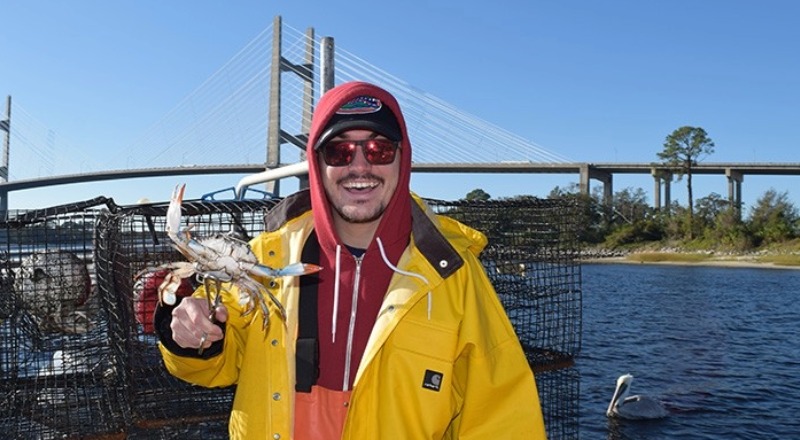
The multinational study brought together researchers from the University of Florida, University of Louisiana at Lafayette, Roger Williams University, Dalhousie University, the Wells National Estuarine Research Reserve and Teesside University.
As part of the project, University of Florida undergraduate researcher Garrett Conover travelled to Teesside University's National Horizons Centre to work alongside Dr Bojko in the Tees Animal Pathology Laboratory, where they helped identify and characterise the newly discovered virus.
The virus, named Cancer borealis nudivirus (CbNV), is part of a group known as a Gammanudivirus, which is found in crustaceans and thought to have evolved from insect infecting viruses millions of years ago.
Dr Bojko said: “Garrett found a really interesting virus which gives us much-needed detail on the evolution of this group of viruses. Many crustacean species appear to carry related viruses, but in most cases, we still know very little about their role in the animals they infect. Discoveries like this help us better understand how these pathogens have evolved and how they may influence aquatic species and fisheries.”
The virus was discovered during the first comprehensive health assessment of the Jonah crab population. Researchers found the species to be generally healthy, with only a small number of parasites and pathogens identified, including a new microsporidian species previously reported by the team along with the newly described virus.
While researchers do not currently believe the virus is fatal, it was found within the crab's hepatopancreas, an organ involved in digestion and immune regulation. Scientists are continuing to investigate whether the virus could affect growth, health or productivity in the species.
Garrett Conover, who led the study, said: “By describing this virus, we highlight a new pathogen and can begin to learn about the effects it may have on the Jonah crab, and therefore the fishery.”
On working at Teesside University, he added: “It was a great opportunity to build my skills and get into the lab and find out what this new virus might be.”
The research team is now developing a diagnostic tool to help agencies and research organisations detect the virus in wild crab populations and monitor its spread.
Latest articles


Most read
- Celebrating student success with global partner
- Teesside University celebrates highest-ever position in Guardian rankings
- Honours for esteemed trio at Teesside University
- Businesses invited to bid for share of £30m Clean Energy Innovation Fund
- Assessing a practical monitoring service for the emerging green hydrogen sector