- Home ›
- Research ›
- Open Research at Teesside University ›
- Open Research in practice
Open Research in practice
In March 2025, Teesside University held its first Open Research Exhibition, showcasing research from across the University. The exhibition highlighted how researchers and professional staff use open practices to make their work more accessible, transparent and impactful.
Explore our case studies to discover how Open Research is being applied across disciplines and the impact it is creating for researchers, partners and communities.
Click below on each of these images/case studies to learn more about how Teesside University’s team have worked with Open Research principles.
Dr Jenna Clarke
Dr Takanori Furukawa
Dr Madeline Clements
Dr Rob Hawkes
Dr Jinoop Arackal Narayanan
Dr Tannaz Pak
Dr Jenna Clarke
Teesside Voices and Stories
Research summary
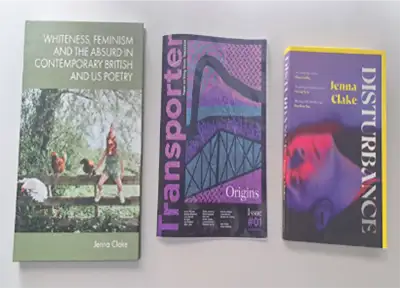
I have led impact-focused projects that aimed to foster research-driven initiatives and collaborations with writers and the publishing sector to position Teesside as a place of creative energy, industry, and opportunity, and challenge dominant narratives and structures that contribute to the exclusion of Teesside voices and stories. The Authors Licensing and Collecting Society (ALCS) reports that only 3% of authors live in the North East of England. Even fewer live in Teesside. Since 2021, recognising this paucity of representation, publishers have begun establishing a presence in the North East: 'big five' British publisher Hachette operates in Newcastle-upon-Tyne; New Writing North has announced plans to develop a Centre for Writing there. Yet, despite this investment, their reach is confined to one city. Despite growing recognition of the need to support regional voices, few targeted initiatives address these inequalities sustainably. The result is a continuing lack of representation, visibility, and opportunity for regional writers.
Working openly
The research process embraced open and participatory principles, as writers were involved in identifying barriers within the publishing sector and co-producing recommendations. This created opportunities for knowledge exchange between researchers, writers, publishers, and cultural organisations.
The printed prototype edition of Transporter was made free-of-cost to the general public, enabling local residents, writers and readers to engage directly with the project. Printed copies were available to pick up from local cultural organisations, including Book Corner in Saltburn, Stockton-on-Tees borough libraries, and ARC Stockton.
Open research outcomes
The open dissemination of this research helped ensure that its findings and creative outputs were accessible beyond academic and publishing-sector audiences. Open access to the publication increased the visibility of writers and stories from Teesside, supporting the project's aim of challenging the under-representation of regional voices. The project demonstrated how open and collaborative approaches can strengthen connections between regional communities and the publishing industry, while generating practical resources and networks that can support future creative and research activity in Teesside.
Dr Takanori Furukawa
Openly Sharing Genomic Data
Research summary
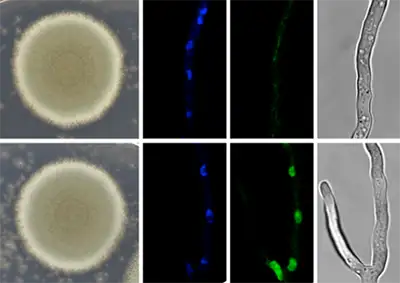
I am a microbiologist specialising in fungal genetics and fungal biology. I recently moved from the University of Manchester to Teesside University. My research aims to save lives by uncovering how human fungal pathogens cause disease at the molecular level. Key features of my work include extensive use of genetic mutants, analysis of large-scale genomic datasets and application of next-generation DNA sequencing technologies. My work is heavily data-intensive and resource-demanding. Core aspects include large-scale generation of genetic mutants, sequencing and analysing thousands of genetic targets and managing extensive raw datasets from next-generation DNA sequencing. I published a dataset covering 10,000 genetic targets, including full raw data tables. High-impact journals now require complete transparency, so I follow a strict full-disclosure policy, meaning entire datasets must be submitted to public repositories, even when only part of the data appears in a paper.
Working openly
I publish all research outputs as open access to meet funder requirements, ensuring free availability through repositories such as Europe PubMed Central. I routinely post preprints on bioRxiv, and recently published two open-access papers, including one in Nature Communications. Beyond publications, I ensure full data transparency by depositing complete datasets in public databases, sharing phenotypic data from ~500 gene knockout mutants and avoiding selective data sharing I also develop research software and release it openly and participate in public engagement, including a museum event where visitors used an app to diagnose a virtual fungal infection case. I visit primary schools to promote STEM, collaborate internationally, including meetings between Swiss and Japanese groups working on microbial fermentation.
Open research outcomes
Open research has improved the transparency, credibility, and reach of my work. I have successfully enabled researchers to validate results and reuse datasets, preventing unnecessary repetition of high-cost experiments. I have increased visibility and citation potential through repositories like FungiDB and strengthened national and international collaboration through sharing of genetic materials Public engagement activities broaden the societal impact of my research by making complex microbiology accessible to non-specialists and supporting STEM education.
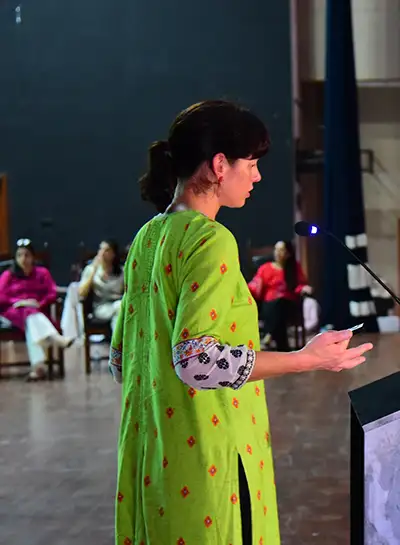
Dr Madeline Clements
Working towards the Creation of Open Archives
Research summary
My research is responsive to the times in which we live, and to the situations in which I find myself. When I was preparing my PhD proposal, I was heavily influenced by the experience of living in post-9/11, post-7/7 London, and by the discussions of contemporaneous research networks like Peter Morey and Amina Yaqin's Framing Muslims: Structures of Representation in Culture and Society Post-9/11. Post-PhD I found myself teaching at Forman Christian College University in Lahore, Pakistan, at a time when the impact of attacks on the country's Christian minority pointed to a compelling need to question literary narratives' role in sustaining and challenging reductive patterns of representation. My research on Balochistan is also driven by a desire to understand how writing from colonial times to the present feeds into contemporary (mis)perceptions of peripheral minorities in the postcolonial nation state, which in turn impact equity in expression for creative communities.
Working openly
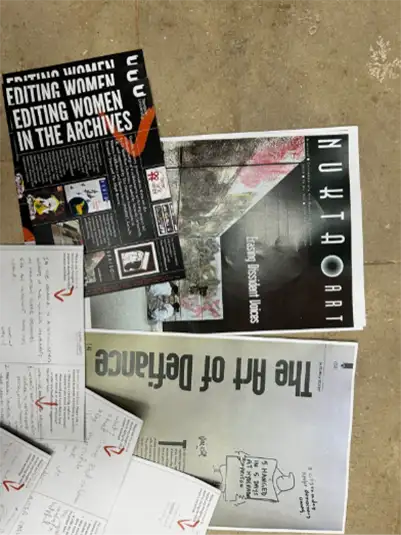
The Editing Women the Archives project aimed to locate and document women-edited magazine publications from Pakistan with an art or literary focus at risk of loss to history, and to learn from the researchers' reflections on the process. The project conducted archival research to preserve otherwise quite ephemeral women's voices, and made that research internationally accessible through digitisation and the creation of an open-access resource.
Our EWA archive provides access to PDFs of a range of women's lifestyle and art magazines from the 1970s to the present, made possible not only by the funding and project partners, The Aleph Review and Karachi Biennale Trust, but also, crucially, by the willingness of women editors and publishers in Pakistan, and of their families, to provide us with the permissions we needed to be able to share their legacy with wider publics.
Open research outcomes
The outcomes of the project are twofold: a digital EWA Handbook, accessible via the Editing Women in the Archives website, and the site itself. The EWA archive needed to be accessible to audiences in Pakistan and viewable on mobiles not just laptops to ensure inclusion of those with limited digital access. Learning from web designers in Pakistan and experienced archivists at London School of Economics' Women's Library, which had recently made its own copies of SHE and other women's magazines digitally accessible, we worked through copyright and other legal requirements for an open digital archive.
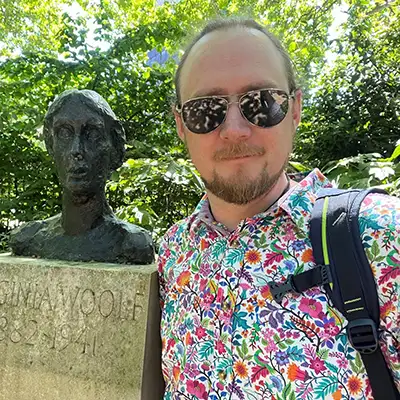
Dr Rob Hawkes
Podcasting as Open Research
Research summary
I am an interdisciplinary researcher whose 'home' discipline is English literary studies, but who draws on a wide range of interests including in heterodox economics, sociology, politics, and (most recently) neuroqueer theory. An important context for my research is what I describe in my recent work as 'the public money paradigm' - see Rob Hawkes and Scott Ferguson, 'Green-Lighting Gatsby', in Inflationary Modernities (Palgrave Macmillan, 2026), and Rob Hawkes, '"Too paranoid for you?"', in Dis/Trusting the Digital World in Imaginative Literature (EUP, 2026). This perspective reframes money as a malleable and contestable public institution that communities can redesign in imaginative, creative, inclusive, and democratic ways. I argue that storytelling is another word for accounting and that the trust involved in using and creating money is closer that we might think to the trust involved in reading and writing works of literature.
Working openly
Since 2021, I have contributed to the Money on the Left podcast, which 'reclaims money's public powers for imaginative intersectional politics'. In 2025, I contributed to the first episode of 'MIMA Talks about Trust', a podcast series exploring 'the concept and power of trust in the contemporary world and across the creative industries'.
I have shared online essays via the Money on the Left vertical and Monthly Review Online, on topics ranging from the idea of money emerging from 'thin air', to higher education funding, the Green Party of England and Wales and 'Democratic Public Finance' (DPF), and 'Where Credit's Due' (a project my colleague Dr Robyn Ollett launched in 2025 and with the support of Teesside University's AHRC Impact Acceleration Account).
Open research outcomes
In several cases, my podcasting, that includes recordings of talks (such as conference presentations, research seminars, and public events) and interviews and conversations, have been catalysts for new thinking - for example, my MotL colleague Scott Ferguson and I recorded a 2-part podcast in 2024 on The Great Gatsby, during which we formulated the argument of our book chapter: 'Green-Lighting Gatsby: Austere Modernisms, Exuberant Avant-Gardes, and their Orgastic Futures', in Inflationary Modernities: Literature, Culture, and Economy, ed. Wayne Stables and Kieran Brown (Palgrave Macmillan, 2026).
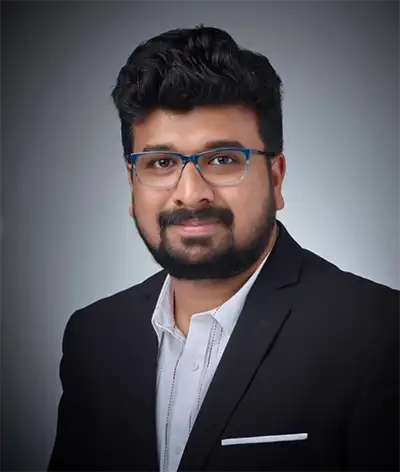
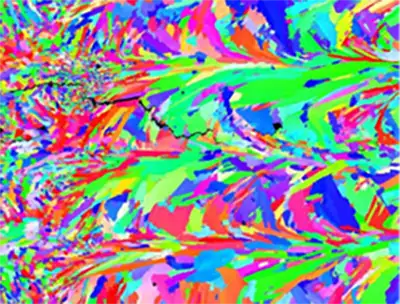
Dr Jinoop Arackal Narayanan
Advancing Sustainable Manufacturing through Open Research
Research summary
My research focuses on additive manufacturing (AM/3D printing), laser-based material processing, surface engineering, and materials engineering. I lead projects that explore the use of AM for net-zero applications and the development of laser surface-modification techniques to enhance the surface performance of materials for deployment in extreme operating environments. My research addresses two connected priorities: delivering higher-performance components for challenging service conditions and enabling more sustainable manufacturing. Additive manufacturing offers opportunities for design optimisation, repair, and reduced waste, while laser surface modification provides a scalable route to tailoring surface properties such as wear and corrosion resistance. Together, these approaches support longer-lasting components, improved resource efficiency, and progress toward net-zero manufacturing.
Working openly
I have engaged with open research in several capacities, including as an author and as an editor. I have published multiple journal articles in open-access international journals, increasing the accessibility of my work in additive manufacturing and laser surface engineering. I have also edited special issues for open-access journals such as Sustainability, Crystals, Sensors, Actuators, and Frontiers in Manufacturing Technology, and I currently serve as an Associate Editor for Frontiers in Manufacturing Technology. In addition, I have delivered more than 30 invited talks and keynote presentations at a range of institutions, with the aim of sharing research findings widely and ensuring that knowledge is disseminated without barriers.
Open research outcomes
Open research has significantly strengthened the impact of my work. My open-access publications have achieved high visibility, leading to strong citation performance and wider engagement from the research community. This increased reach has supported peer recognition and has resulted in invitations to present my research through invited talks and keynote sessions. From my experience as an editor within open-access publishing, I have also seen how open research enables findings to reach broader and more diverse audiences, accelerating knowledge exchange and supporting innovation across disciplines and sectors.
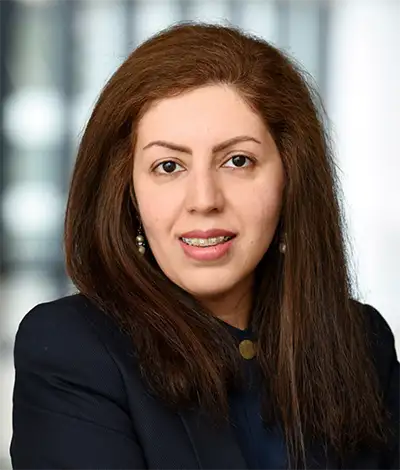
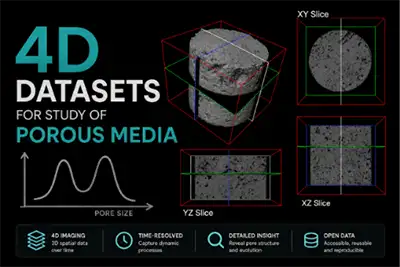
Dr Tannaz Pak
Openly Imaging Data for Sustainable Materials
Research summary
My research bridges environmental engineering, materials science and porous media physics, examining how microstructure shapes the performance of sustainable materials. I use advanced 3D X-ray micro-computed tomography (micro-CT) to investigate how processes like pyrolysis convert biological feedstocks into porous carbon materials such as biochar. By quantifying pore connectivity, anisotropy and hierarchical structure at the microscale, I explore how internal architecture influences material behaviour in applications including water treatment, carbon sequestration and pollution remediation. Understanding structure-function relationships in porous materials is critical for designing sustainable technologies for environmental remediation and water treatment. My research uses high-resolution imaging and quantitative analysis to investigate how biological feedstocks are transformed during pyrolysis into porous carbon networks with complex hierarchical structures. These materials are increasingly used in environmental engineering applications, particularly for soil enhancement and as adsorbents and filtration materials. By studying their pore-scale architecture, my work contributes to improving the design and performance of sustainable materials used in environmental technologies.
Working openly
Open Research is central to my work, particularly through the publication of imaging datasets as peer-reviewed data papers. Publishing in Scientific Data (Nature Portfolio) ensures that datasets are openly accessible, fully documented and accompanied by rich metadata, allowing researchers to reuse, interrogate and build upon them. My research has generated several high-resolution X-ray micro-computed tomography (micro-CT) datasets of porous materials, which are shared through repositories such as Figshare and linked to peer-reviewed outputs. One example is a widely used micro-CT dataset published in Scientific Data, providing detailed 3D images of porous structures for modelling and image analysis: More recently, my PhD student Nouha and I digitised and published a new dataset related to environmental contamination in Brazil, transforming difficult-to-access data into an openly available resource for remediation research.
Open research outcomes
Sharing datasets openly has greatly expanded the visibility and impact of my research beyond traditional publications. By publishing imaging datasets as open data papers, the underlying research materials become directly reusable by researchers across porous media science, environmental engineering, computational modelling and image analysis. My datasets have received more than 68,000 views and over 10,000 downloads on Figshare, demonstrating substantial international engagement. These resources support new research questions, model validation, development of image-processing techniques and machine-learning applications in porous media.