The Institute for Collective Place Leadership
 The Institute for Collective Place Leadership undertakes place-based research to support regional growth, development and regeneration through creative and collaborative approaches that brings together policymakers, communities, businesses and academics. Our research equips place-based leaders with the tools, skills and knowledge to operate in complex and changing environments, to develop responsible and sustainable practices, and to imagine alternative and inclusive futures.
Our work is clustered around three thematic areas:
- Empowered and Inclusive Places
- Imaginative and Innovative Places
- Sustainable and Resilient Places
To become an international beacon for collective place-based leadership, a place where community voice, business knowledge, and policymaker expertise connects with academic research and innovation to drive forward shared, inclusive, and prosperous futures.
Mission
Dedicated to catalysing social, cultural and economic change within regions in transition, the Institute for Collective Place Leadership brings together arts, humanities, business, and social science research to address some of the most complex challenges facing society today.
Our expertise
Place Leadership and Community Empowerment
Through portfolio funding from regional and national charities and foundations, our research fosters creative cross-sector conversations on the future of our neighbourhoods, towns and cities. Supporting the development of place leadership and community research skills, our work develops new and innovative models for placemaking, community engagement, and regeneration that bring a diverse range of regional actors into dialogue.
Evidence-Based Policy and Practice
Our work with local and regional authorities, through programmes such as the UK National Institute for Health Research (NIHR) funded Health Determinants Research Collaboration, support infrastructure development that embeds research and innovation within regional policymaking and practice. Working closely with public sector professionals, our research ensures that policy and practice in the public sector is data-driven and people-centred, with outcomes aligned to stakeholder needs.
Workforce Development and Business Growth
Our research seeks to close regional education and skills gaps through participatory projects with education providers, employers, and policymakers. The Skills for Growth Programme, for instance, funded by our regional authority (Tees Valley Combined Authority) has provided training on leadership, entrepreneurship, and business strategy, supporting local SME leaders to expand and grow their businesses. Through both our research and practice, our work supports the development of sustainable regional and organisational growth strategies that balance environmental, social, and economic considerations.
Environmental Justice and Climate Change Adaptation
Our work on the social, economic and ethical dimensions to sustainable development brings together cross-sector and community perspectives to explore how energy and climate transitions are responsible and socially just. Our research explores the intersection of technological development, climate change, environmental and energy policy, and public health to support community, business and policy interventions that can help to mitigate the impact of climate change at the local and regional levels.
Youth Empowerment and Education
Through sustained partnerships with education providers, our research empowers young people to become future leaders and change-makers. Our research support the development of inclusive and empowering educational environments to support critical thinking, futures thinking, and civic engagement.
Creative and Digital Skills for Social Good
Research on arts, creativity, and entrepreneurship has actively supported the continued growth of the creative, cultural and digital sectors within the Tees Valley and the North East. Through projects such as Borderlands (funded by Arts Council England) and Creative Fuse (funded by the UK Arts and Humanities Research Council), our research supports the development of more inclusive digital and creative economies that can contribute positively to society.
Leadership team
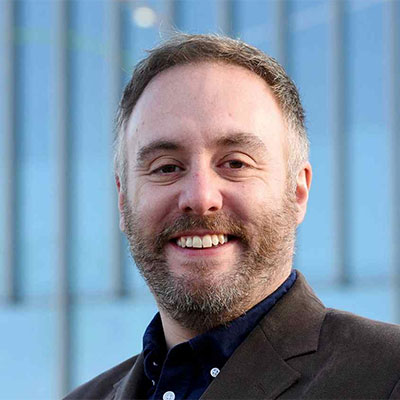
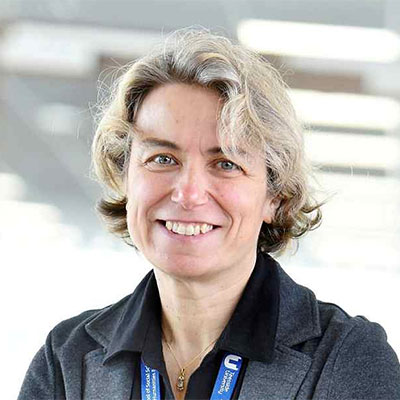
Professor Antonia Liguori
Programme Director for Imaginative and Innovative Places
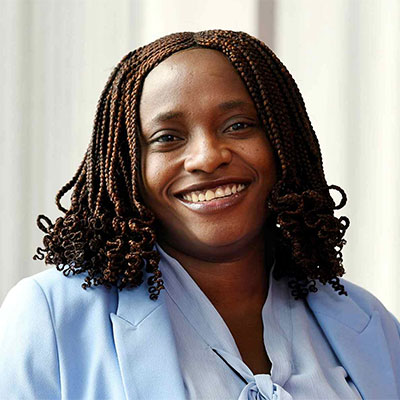
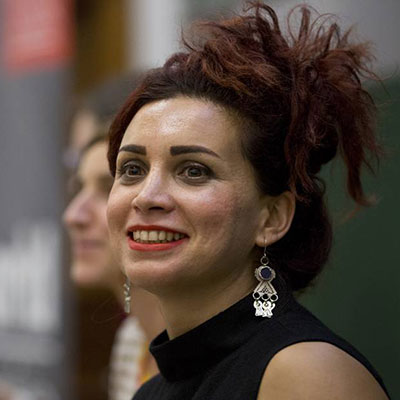
Dr Gbemisola Ogbolu
Early Career Researcher Representative and innovation and entrepreneurship expert
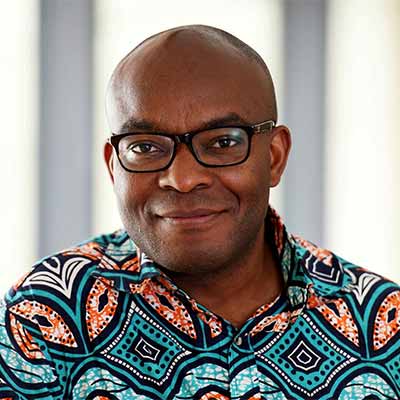
Dr Jean Pierre Elonga Mboyo
Mid-Career Researcher Representative and educational leadership and inclusion expert


Research at Teesside
High-quality and impactful public health research translates into real-world benefits to society in terms of improved health, wellbeing, and quality of life. When carried out with rigour and integrity, research can help improve people’s lives.
Rooted in our interdisciplinary expertise in creative methodologies, coproduction, and place-based research, the Institute fosters imaginative approaches to research that empower our communities and partners to address some of society's most complex challenges and foster more sustainable, inclusive, and innovative ways of living.
Impact case studies
Combatting organised crime
Informing smarter approaches for preventing and dealing with organised crime
Read moreAre commemorations more than they seem?
Analysing commemorations of the 1916 Easter Rising to understand how historical events create meaning in the present
Read moreCreating 'useful museums'
Reimagining the role of communities in curating museums and galleries
Read moreEngaging everyone in public health policy
Highlighting the value of stakeholder participation when developing public health programmes
Read moreImproving access to justice for vulnerable people
Exploring the role of rapport-building and intermediaries in engaging vulnerable individuals in the Criminal Justice System
Read moreLong-term health conditions: Putting experience first
Helping people with long-term health conditions and their health professionals improve self-management and wellbeing
Read morePlacing disability arts centre stage
Increasing the visibility of marginalised disabled people in cultural spaces and cultural production
Read moreRe-interpreting the North East’s industrial past
Giving value to alternative narratives for the North East’s heavily industrialised past
Read morePromoting gender equality in writing and research
An immersive three-day workshop focused on advancing the research careers of next generation women scholars in Pakistan.
Read moreThe Conversation
The Conversation is an independent source for news and opinions, written by the academic and research community for a general public audience.
Cartoons have always been for adults but here’s how they got tangled up with kids
03/02/2020
Julian Lawrence
BoJack Horseman, the show about an anthropomorphic horse struggling with depression and addiction, has come to end.
Assassin’s Creed TV series: why it’s so hard to adapt video games for the screen
16/11/2020
Ian Sturrock
The Assassin’s Creed franchise is leaping forward (off the top of a building, presumably) with the release of the 12th game in the series – Assassin’s Creed Valhalla – and the recent announcement of an upcoming Netflix show.
Four tips to make the most of your next gallery visit
21/05/2021
Laura Sillars
Going to a gallery can be an escape from the everyday – an opportunity to fall into a moment of reverie in front of an artwork that you know cannot be replicated in print or online.
What Keir Starmer can learn from the history of Labour leader documentaries
01/06/2021
Christopher Massey
The news that Keir Starmer is considering starring in a fly-on-the-wall documentary, brings back memories of similar endeavours.
Anne Boleyn: in defence of historical inaccuracy
07/06/2021
Leanne Bibby
The Channel 5 historical drama series Anne Boleyn, directed by Lynsey Miller, stars black British actor Jodie Turner-Smith as the Tudor queen consort at the height of her power and influence, shortly before her dramatic fall and execution in May 1536.
Michael K Williams and The Wire: how the show redefined television watching
08/09/2021
Ben Lamb
Emmy-nominated actor Michael K Williams has died aged 54, reportedly of a suspected drug overdose. Early last year the actor mused on instagram “How will I be remembered and what will be my legacy?”
Labour party conference: the dispute around rule changes explained in brief
27/09/2021
Christopher Massey
The Labour party has voted to amend the rules governing how it elects leaders at its 2021 party conference.
Sarah Everard murder: the problem with the government’s plan to make women ‘feel’ safer
04/10/2021
Tanya Beetham
The murder of Sarah Everard has damaged public trust in the police, and has women in the UK seeking answers about their safety in public places.
Dennis the Menace lives on: the influence of this 70-year-old on everything from darts to raves
02/12/2021
Julian Lawrence
The current Somerset House exhibition in London, Beano: The Art of Breaking the Rules, revels in the joyful impudence of the 83-year-old comic magazine’s characters. A tribute to the publication’s impact seems long overdue; as curator Andy Holden says: “Beano’s irreverent sensibility is something that appeals to you as a child, but also, for some, never leaves you.”
Nigeria’s Boko Haram reintegration process: weaknesses and how they can be fixed
19/01/2022
Dr Tarela Ike
n Nigeria, the advent of Boko Haram terrorism and its wanton destruction of lives and properties has led to untold hardship, especially in the country’s north-eastern region. The devastating impact of Boko Haram activities transcends Nigeria’s borders.
French ski resorts are fighting for survival due to changing COVID travel restrictions
21/01/2022
Leon Davis
Before COVID, the winter sports tourism industry was worth over €70 billion (£58.2 billion) a year globally, with ski resorts expanding across the world. The pandemic then led to a stark decrease in visitor numbers, with a major impact on revenues and livelihoods.
Bloody Sunday 50 years later: what it means when we commemorate trauma
28/01/2022
Roisín Higgins
At its heart, Bloody Sunday was a devastating personal tragedy involving the deaths of 13 men and boys, six of whom were only 17 years old. The victims were taking part in a civil rights protest march against internment.
How your brainwaves could be used in criminal trials
30/06/2022
Michel Funicelli
Law enforcement agencies worldwide struggle with the unreliability of eyewitness identification and scarcity of physical clues at crime scenes. There is a wealth of evidence showing that mistaken eyewitness identification is a contributing factor in wrongful convictions.
When do strikes work? History shows the conditions need to be right
08/08/2022
Christopher Massey
There has been a significant decline in union-led strike action in the 21st-century UK. But with average public sector pay increasing by 1.5% between March and May 2022 (versus 7.2% in the private sector) and households facing a cost of living crisis, industrial disputes are on the rise again in the UK.
Nigerian police: why improving public trust has proven difficult
04/10/2022
Tarela Juliet Ike
Policing plays a vital role in maintaining law and order in any society. Public trust and confidence in the police is a concern in many parts of the world.
Winter of discontent: how similar is today’s situation?
05/12/2022
Christopher Massey
The UK government is battening down the hatches for a wave of strikes in December and January. Railway workers, nurses, ambulance workers, civil servants and postal staff are all set to take industrial action in the coming weeks in protest at wages not keeping up with inflation, with teachers’ and firefighters’ unions also balloting their members.
Why David Hockney’s Bigger and Closer is an important step forward for immersive art shows
23/02/2023
Simon McKeown
Artist David Hockney has ridden many technological waves. While his mark-making has remained resolutely painterly, he has challenged the practice of painting. He was an early adopter of computer-assisted drawing, using the iPad and iPhone.