Course overview
Foundation year Work placement
See why we're number 1 for Graphic Design!
Check out why we're voted number 1 for graphic design three years in a row in the Guardian University Guide 2026, 2025 and 2024.
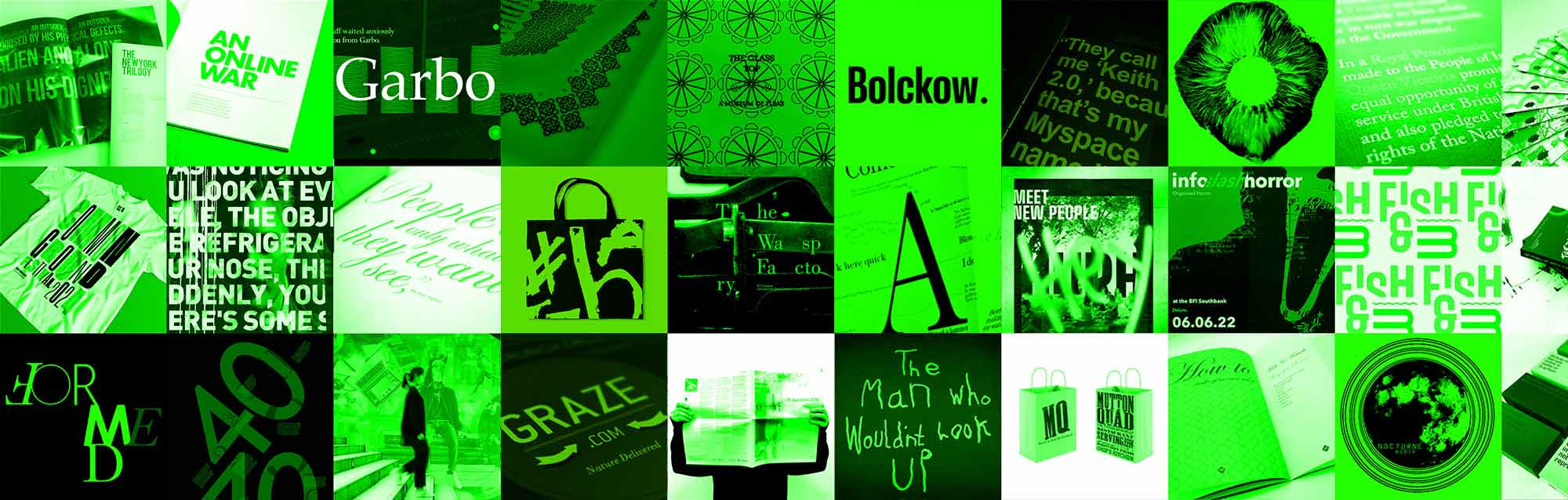
Delve into key skills like research, strategy, typography, and process design, gaining a holistic understanding of professional design practice. We offer a dynamic approach to the discipline, preparing you for a broad range of media including digital, print, and environmental. As a graphic designer, you explore your social responsibility while developing critical thinking, experimentation and innovative visual communication, in this ever-evolving area.
Top reasons to study graphic design at Teesside University:
- Nationally recognised:
- Teesside University is 1st in the UK for Graphic Design three years running. (Guardian University Guide 2026, 2025 and 2024, tees.ac.uk/source)
- Teesside University was ranked 6th for Student Satisfaction for Art & Design in the Complete University Guide 2026. (83 institutions were ranked, tees.ac.uk/source)
- Industry recognition: our courses and campus are powered by Adobe, Apple and Wacom. We’re Europe’s first Adobe Creative Campus, the only Apple-accredited university and a Wacom Experience School, equipping you with the digital tools and resources to transform the creative world. Our courses have a built-in Creative Week – a workshop based, festival style, off-timetable week each semester where you can experiment with new materials, make visits and upgrade your tech skills.
- Professional membership: we’re a member of the Association of Illustrators giving you access to interactive talks, guidance on contracts and licensing. You also have your own discounted membership, equipping you with the tools to forge a successful career in industry or as a freelancer.
- Work-ready: 90% of BA (Hons) Graphic Design students go on to work and/or study 15 months after the course (Graduate Outcomes Survey 2020-21, tees.ac.uk/source). The course includes short, career-focused modules helping you understand working in the arts and creative industries. You look at how the graphic design industry works, how to access it, who shapes it and how to grow within it. From industry leaders’ professional wisdom and insight, to accessing professional opportunities and creative coaching.
- Enter awards: you are supported to enter career-enhancing awards, including the Adobe Global World Championships held in Disney Studios, the Creative Conscience Awards, D&AD New Blood Awards and the renowned International Society of Typographic Designers (ISTD) – many of our students have been successful in winning awards at these events.
Responding to live briefs and developing personal projects, you create a substantial portfolio through your degree and gain an understanding of wider global contexts, sustainability and the changing shape of equality and diversity. Recent students have worked with the North York Moors National Park Authority, ITV/Signpost Productions and the National Horizons Centre. Alongside this, a team of leading designers, employers and alumni, support you in adapting your work to meet a brief, from concept and planning work, pitching an idea on paper, screen and in person, to meeting a deadline. You also have opportunities for field trips, fellowships and international mobility with our partners in Dubai and India.
Creative UK Take advantage of our Creative UK membership and help futureproof your career, with networking events, a resource hub to support professional development, and bespoke workshops in partnership with industry leaders and mentors. Sign up for free student membership to get opportunities, events and newsletters sent directly to your inbox.
Course details
Course structure
Year 1 core modules
Enhance your skills in team-working, communication, project management and negotiation. You collaborate with a group of your course mates to produce a small-scale creative project in response to a subject-specific brief.
This is a 20-credit module.
Explore the core skills of graphic design informed by research, covering visual grammar, typography, layout, image and idea generation. You learn about the importance of creative thinking, experimentation, communication and implementation within a project themes framework.
This is a 40-credit module.
Introduction to the Creative Industries
With many opportunities in the creative industries sector, learn how to start on your career path while developing vital employability skills such as networking and digital presence. Understand the structure of the sector and the interdisciplinary relationships between art, design and media. Discover how the sector operates locally, nationally and globally – debating the role of policy and the importance of sustainability.
This is a 20-credit module.
Gain experience of utilising appropriate narrative, emotion and sequence as a fundamental aspect of visual communication and creative practice. Understand how found or individually generated narratives can be utilised imaginatively within design to engage an audience/user.
This is a 40-credit module.
Year 2 core modules
Develop critical thinking and analysis skills, exploring contemporary issues and debates related to the creative industries. You research a specific area or development within your chosen subject – this may be technical, economic, ethical, legal, cultural, sociological, or a combination. You draw on appropriate academic and industry sources to contextualise your research. You present your topic and initial research within taught sessions, providing an opportunity for peer and tutor feedback.
This is a 20-credit module.
Identity, Experience and Environments
You are introduced to branding and identity to become a strategic thinker and creative communicator, vital in graphic design practice. Using various technologies, you explore how creative works can be situated in differing environments providing opportunities to inform, agitate, navigate and enrich people’s lives. Develop an understanding of how design is used, and could be used, in commercial, social and public indoor and outdoor settings.
This is a 40-credit module.
You develop and explore, in depth, a creative industry-based project in your specialist area of design, art, media, music, photography or illustration - relevant to your future professional practice. While forming a professional portfolio of work, you experience real-world business scenarios and challenges, industry competitions and cross and inter-disciplinary activities. You gain skills in project management, applied research methods and collaborative creative work.
This is a 40-credit module.
Working in the Creative Industries
There are many challenges facing contemporary art, design and media practices. You research the social, political or ecological challenges around us to generate a small-scale project. You develop and reflect on your understanding of enterprise in the context of the creative industries. Contextualise your own professional practice and aspirations through application of critical thinking and problem-solving skills.
This is a 20-credit module.
Optional work placement year
You have the option to spend one year in industry learning and developing your skills. We encourage and support you with applying for a placement, job hunting and networking.
You gain experience favoured by graduate recruiters and develop your technical skillset. You also obtain the transferable skills required in any professional environment, including communication, negotiation, teamwork, leadership, organisation, confidence, self-reliance, problem-solving, being able to work under pressure, and commercial awareness.
Many employers view a placement as a year-long interview, therefore placements are increasingly becoming an essential part of an organisation's pre-selection strategy in their graduate recruitment process. Benefits include:
· improved job prospects
· enhanced employment skills and improved career progression opportunities
· a higher starting salary than your full-time counterparts
· a better degree classification
· a richer CV
· a year's salary before completing your degree
· experience of workplace culture
· the opportunity to design and base your final-year project within a working environment.
If you are unable to secure a work placement with an employer, then you simply continue on a course without the work placement.
Final-year core modules
You produce a self-managed, individual extended piece of independent investigation and/or creative production or portfolio of work. Supervised by an academic member of staff, you take responsibility for the planning and execution of the work, including the consideration of associated legal, social, ethical and professional issues. You explore in depth a chosen subject area, demonstrating your ability to analyse, synthesise and creatively apply your learning, showing critical and evaluative skills and professional awareness.
This is a 60-credit module.
Plan and implement your departure from education to your first or new career, or to further study. You continue your creative practice, developing a portfolio and/or extended piece of work which reflects you as a creative. You explore discipline-specific employability strategies, and engage and network with industry to develop key connections.
This is a 60-credit module.
Modules offered may vary.
How you learn
Think, dream and make: learn through doing, with focused studio time for practice-based creative work, allowing you to develop ideas and undertake larger-scale, more ambitious projects.
Develop your creative voice: you are coached to find and grow your creative voice. Collaboration with industry professionals and your peers gives you new perspectives on developing your practice.
Grow resilience: develop a creative journal, capturing your challenges, milestones and reflections to see patterns in your thinking and linking reoccurring ideas. You learn how to test ideas, explore creative directions, understand pitching etiquette and develop large-scale projects to help you thrive in the creative industries.
Join the creative sector: our intensive, career-focused modules help you understand working in the arts and creative industries. From industry leaders’ professional wisdom and insight to accessing professional opportunities and creative coaching, you become an industry insider and leave with a working understanding of the professional community.
Become connected: access our network of alumni and practising creatives at Middlesbrough Institute of Modern Art (MIMA). Benefit from supportive voices, specialist expertise, shared wisdom and new ideas, establishing critical relationships that propel you into your creative career.
Get creative: take part in MIMA Creative Week, a festival of workshops where you experiment with new materials, go on field trips and upgrade your tech skills.
Expand your horizons: collaborate with our international partners in Dubai and India becoming international creative citizens while developing an understanding of wider global contexts, sustainability and the changing shape of equality and diversity.
How you are assessed
The work produced is the work assessed; there are no examinations, and the production of design projects is a key feature. Assessment is undertaken against carefully defined criteria and project-based assignments involve a critique. The critique is a reflective process allowing for both staff and peer group appraisal. You receive written feedback to help you reflect and prepare for future modules.
Our Disability Services team provide an inclusive and empowering learning environment and have specialist staff to support disabled students access any additional tailored resources needed. If you have a specific learning difficulty, mental health condition, autism, sensory impairment, chronic health condition or any other disability please contact a Disability Services as early as possible.
Find out more about our disability services
Find out more about financial support
Find out more about our course related costs
Entry requirements
Entry requirements
Year 1 entry
96-112 points, including a creative subject, from any combination of recognised Level 3 qualifications and a creative portfolio showing skills in your chosen discipline. Digital portfolios are accepted but you are given the opportunity to attend a session on campus to discuss your portfolios with our staff. Consideration is also given to students without formal qualifications but with evidence of practical subject experience at an appropriate level.
Applicants are invited join us on campus for an Offer holder day, enabling you to see our graphic design facilities, get feedback on your portfolio from members of the graphic design team, meet staff and students and learn more about studying at Teesside University.
Non-EU international students who need a student visa to study in the UK should check our web pages on UKVI-compliant English language requirements. The University also provides pre-sessional English language courses to help you meet the English language requirements.
Helping you meet the entry requirements
We may be able to help you meet the requirements for admission by offering you the opportunity to study one or more Summer University modules, some of which can be studied by distance learning.
Alternative degree with integrated foundation year
If you are unable to achieve the minimum admission requirements for Year 1 entry you could, subject to eligibility, join one of our degree courses with an integrated foundation year.
Direct entry to later years
If you have previously studied at higher education level (for example, a foundation degree, HNC, HND or one or more years at degree level at another institution) you may request direct entry to Year 2 or year 3 of this degree.
Mature applicants
We welcome applications from mature students (aged over 21) who can demonstrate, through portfolio/written work and relevant experience, that they have developed cognitive and technical skills through their life experiences.
For general information please see our overview of entry requirements.
International applicants can find out what qualifications they need by visiting our international country pages.
You can gain considerable knowledge from work, volunteering and life. Under recognition of prior learning (RPL) you may be awarded credit for this which can be credited towards the course you want to study.
Find out more about RPL
Employability
Career opportunities

To support professional practice experience, you get involved with competitions from professional bodies such as Design and Art Direction (D&AD), You Can Now, Royal Society of Arts and International Society of Typographic Designers. You also have the opportunity to exhibit work externally.
D&AD connects to a community of creative professionals, providing essential industry and educational insight. Since 1962, D&AD has been inspiring a community of creative thinkers by celebrating and stimulating the finest in design and advertising. The D&AD Professional Awards are recognised globally as the ultimate creative accolade, entered and attended by the best from around the world.
You are prepared for a career in branding, advertising, strategy and visual communication. Our alumni are working as freelancers in entrepreneurial start-ups or in companies including Sapient Razorfish, plewsy.com, Juiced Studio, Kairos Media Group, KPMG, Calm Digital, The Chase, Lazy Oaf, DA Digital and Hype Type Studio.
You are prepared for a career in branding, advertising, strategy and visual communication. Our alumni are working as freelances, in entrepreneurial start ups or in companies including Sapient Razorfish, plewsy.com, Juiced Studio, Kairos Media Group, KPMG, Calm Digital, The Chase, Lazy Oaf, DA Digital and Hype Type Studio.
Work placement
A work placement officer and the University's award-winning careers service help you with applying for a placement. Advice is also available on job hunting and networking.
By taking a work placement year you gain experience favoured by graduate recruiters and develop your technical skillset. You also obtain the transferable skills required in any professional environment. Transferable skills include communication, negotiation, teamwork, leadership, organisation, confidence, self-reliance, problem-solving, being able to work under pressure, and commercial awareness.
An increasing number of employers view a placement as a year-long interview and, as a result, placements are increasingly becoming an essential part of an organisation's pre-selection strategy in their graduate recruitment process.
Potential benefits from completing a work placement year include:
- improved job prospects
- enhanced employment skills and improved career progression opportunities
- a higher starting salary than your full-time counterparts
- a better degree classification
- a richer CV
- a year's salary before completing your degree
- experience of workplace culture
- the opportunity to design and base your final-year project within a working environment.
Information for international applicants
Qualifications
International applicants - find out what qualifications you need by selecting your country below.
Select your country:
Useful information
Visit our international pages for useful information for non-UK students and applicants.
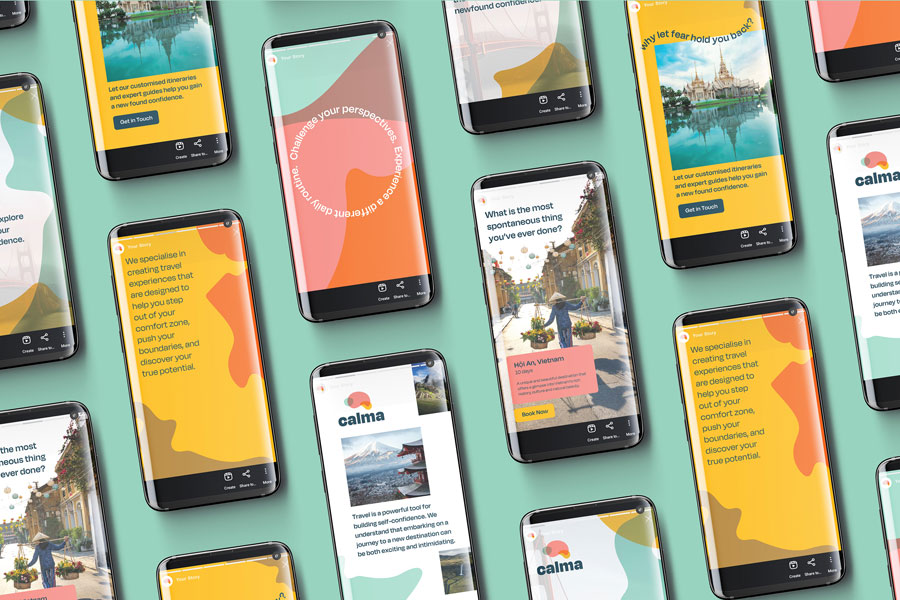


 BA (Hons) Graphic Design and Illustration
  BA (Hons) Graphic Design with Marketing
 BA (Hons) Graphic Design
 Fuelling the next generation of entrepreneurs at Teesside University
 Graduate achieves record success at Adobe World Championship
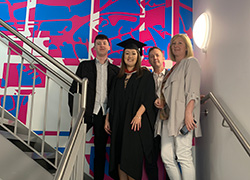 Graphic design graduate going from strength to strength