Teesside University leads new research into Roman Empire’s leather economy
Pioneering research led by Teesside University will unlock clues to the Roman Empire’s leather economy, shedding new light on ancient manufacturing, trade, and everyday life.
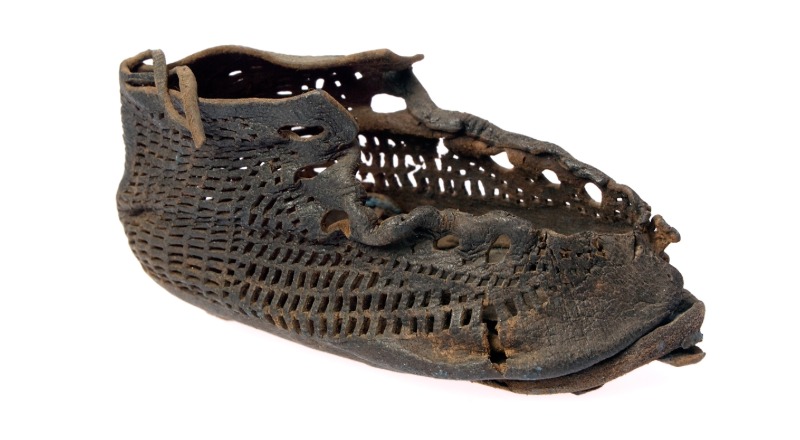
The research project aims to uncover how leather was produced, traded, and used across the Roman Empire, a topic that has long remained elusive due to the rarity of preserved organic materials.
Dr Gillian Taylor, Associate Professor at Teesside University’s School of Health & Life Sciences, is leading the project.
Dr Taylor is working alongside researchers Professor Rhiannon Stevens of University College London, Dr Elizabeth M Greene, Canada Research Chair in Roman Archaeology at Western University in Ontario in Canada, and Professor Matthew Breen, Distinguished Professor of Comparative Oncology Genetics at North Carolina State University in America.
The three-year project has received £1.3m grant funding through a UK Research and Innovation (UKRI)?Arts and Humanities Research Council (AHRC) award.
Cutting-edge scientific techniques will be combined with ancient DNA sequencing, and archaeological expertise to explore leather artefacts from key Roman sites in Britain, the Netherlands, and Syria.
The project focuses on leather artefacts from sites such as Vindolanda, a Roman fort near Hadrian’s Wall in Northumberland, which boasts the largest collection of Roman leather objects in the Empire. Other key sites include Trimontium in Scotland, Valkenburg and Vechten in the Netherlands.
This work will help us understand not just how people lived, but how they adapted, innovated, and connected across vast distances
The research team will also be working with Vindolanda Trust, the National Museum of Scotland, and Dutch national archaeological museum National Museum of Antiquities in the Netherlands.
These institutions are providing access to collections and supporting outreach activities which will help to bring the research to life for global audiences.
“This is the first large-scale biomolecular analysis of Roman leather,” said Dr Taylor. “By identifying the species, sex, and origin of animals used in leather production, we can reconstruct and learn more about the socio-economic networks that supported Roman life, from military supply chains to civilian craftsmanship."
Dr Taylor added: “By integrating scientific data with historical models, we’re building a more complete picture of the Roman economy. This work will help us understand not just how people lived, but how they adapted, innovated, and connected across vast distances.”
She also highlighted the timely nature of the research project, as climate change continues to accelerate the degradation of archaeological sites. The research findings will help to shape future policies for archaeological recovery and identification of leather, particularly where organic artefacts are at risk.
Latest articles
 Teesside University leads new research into Roman Empire’s
...
Teesside University leads new research into Roman Empire’s
... Nourishing Tomorrow: my insights from the British Nutrition
...
Nourishing Tomorrow: my insights from the British Nutrition
... International acclaim for film celebrating region’s mining
...
International acclaim for film celebrating region’s mining
...Most read
- Teesside University crowned as Modern University of the Year 2026
- Teesside University shortlisted for prestigious University of the Year award
- Teesside University Vice-Chancellor Professor Paul Croney OBE announces retirement
- Teesside University leads global student innovation in international hackathon
- International partnership to drive net zero innovation