Teesside University launches major CO2 separation validation project supporting East Coast Cluster ambitions
A new Teesside University-led project will deliver independent evidence on advanced CO2 separation technologies, supporting the region’s growing hydrogen and biogas ambitions.
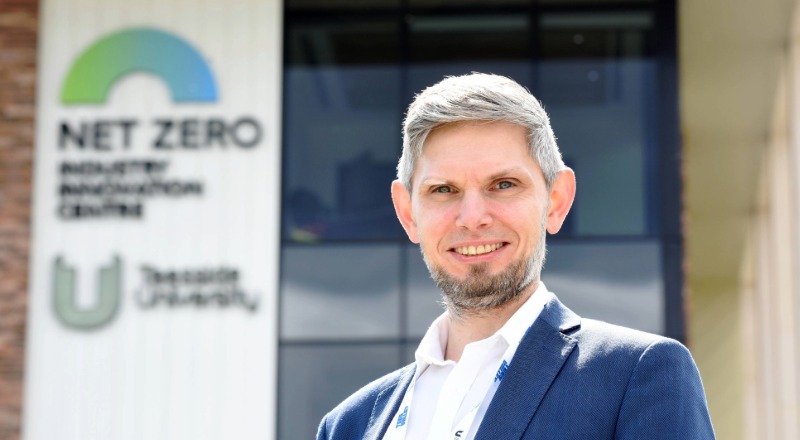
The initiative is in strategic collaboration with PolyCapture Limited, which develops greenhouse gases separation technologies.
It will evaluate solid sorbent CO2 separation as a potentially lower energy, lower cost alternative to incumbent technologies, strengthening the evidence base for industrial decarbonisation.
The 12-month programme will provide decision ready technical, economic, and environmental data to inform deployment pathways for low carbon hydrogen, biogas upgrading, and wider CCUS applications.
It also supports PolyCapture’s existing involvement in the post-combustion capture of CO2, from a new energy generation and recovery facility that is already part of the DESNZ ECC Teesside Selection process.
The project is designed to generate decision ready technical, economic, and environmental evidence that supports credible deployment pathways for low carbon fuels and industrial decarbonisation in Teesside.
The launch comes as the Department for Energy Security and Net Zero (DESNZ) invites applications from CCUS projects seeking connection to the East Coast Cluster (ECC) Teesside network by 2032, with DESNZ assessing applications through the ECC Teesside Selection Process to identify projects that could connect and utilise remaining capacity at the Endurance offshore site.
This regional context emphasises the need for robust, independently validated separation and process solutions that can derisk investment decisions and support delivery at scale.
The project will deliver a comprehensive evidence package covering performance, design, economics, and environmental impact by independently characterising and validating the material under realistic industrial syngas and biogas operating conditions, including cyclic durability testing to 20 cycles.
It will develop and optimise process flowsheets and operating concepts for two deployment pathways; blue hydrogen purification and biogas upgrading with CO2 valorisation linked to sustainable aviation fuel value chains.
Alongside this, a dedicated market assessment and stakeholder engagement programme will map deployment opportunities and readiness needs, engaging hydrogen producers, biogas operators, and stakeholders connected to Teesside International Airport. The project will conclude with a commercial deployment roadmap and impact report to guide follow on pilot activity and scaleup decisions within Teesside’s developing low carbon cluster.
Professor Dawid Hanak, Project Principal Investigator and Professor in Decarbonisation of Industrial Clusters at Teesside University’s Net Zero Industry Innovation Centre, said: “Delivering net-zero at scale requires close collaboration between technology developers, industrial operators, and academia, so that promising innovations are tested rigorously and translated into deployable solutions.
“This project integrates independent validation with techno-economic assessment and life cycle assessment, alongside early commercial engagement, to quantify performance, cost and carbon impacts and provide industry with decision-ready evidence to de-risk investment and accelerate deployment.”
States Chiwanga, PolyCapture Founder Director added: “PolyCapture’s dry sorbent-based separation technology is already being demonstrated through pilots, and the next step is to accelerate replication and scale-up in real industrial settings.
“This programme will deliver the independent validation, optimised designs, and transparent TEA/LCA benchmarks that will help industrial customers to move faster from pilot learnings to larger commercial deployments, particularly in high-impact Teesside value chains such as hydrogen and biogas.”
Latest articles
 Teesside University launches major CO2 separation validation
...
Teesside University launches major CO2 separation validation
...![L-R - Dr Faizan Ahmad (Teesside University) and Professor Ondrej Masek (University of Edinburgh). [Naomi Gabrielle Photography]](https://www.tees.ac.uk/images/commonimages/publication_photos/release_photos/thumbnails/8938.jpg "More about Teesside University research team wins national Elektra
...") Teesside University research team wins national Elektra
...
Teesside University research team wins national Elektra
... Teesside University academic shaping climate policy through
...
Teesside University academic shaping climate policy through
...Most read
- Teesside University Vice-Chancellor Professor Paul Croney OBE announces retirement
- Teesside University wins prestigious University of the Year award
- Boro fan Danny lands dream job at the club
- Teesside University appoints next Vice-Chancellor and Chief Executive
- Teesside University professor named among UK’s top tech women