AI-BIM and digital fabrication for healthier, low-carbon buildings
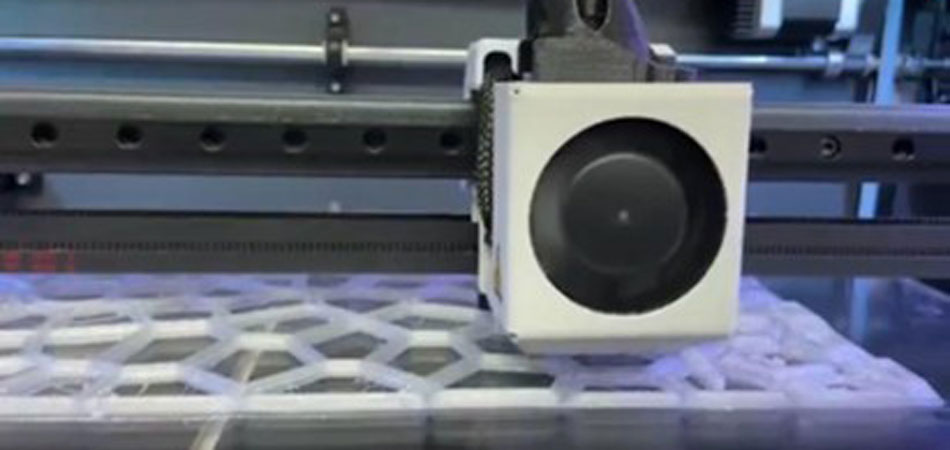
This research explores how AI-enabled Building Information Modelling (AI-BIM) and digital fabrication can support the development of healthier, more sustainable buildings. By combining 3D printing, performance testing and intelligent design workflows, the project aims to improve building performance while reducing carbon impact.
Challenge
The UK construction sector faces two major challenges: improving building health and comfort while meeting ambitious net zero targets. Damp, mould and poor acoustic performance remain common issues in housing and public buildings, affecting occupant wellbeing and building quality. At the same time, the industry must reduce both operational and embodied carbon across new-build and retrofit projects.
Solution
This research explores how digitally fabricated, 3D-printed building components can address these challenges through smarter design, testing and material use.
The project designs, prints and evaluates wall and façade modules focused on four key outcomes: improved energy performance, moisture-safe detailing and mould-risk reduction, enhanced acoustic control, and measurable sustainability gains.
At the core of the approach is an AI-enabled Building Information Modelling (AI-BIM) workflow, linking parametric design, print parameters and performance testing. Each prototype iteration is assessed against KPIs including embodied carbon, material efficiency and constructability.
Using cementitious mixes suitable for large-scale printing, alongside natural and bio-derived materials where they offer clear advantages, modules undergo testing for U-values, surface temperature performance, mould risk and acoustic performance. Findings are continuously fed back into the BIM model to refine design and material decisions.
Impact
The project will deliver evidence-based component specifications, validated performance data and practical guidance for clients, local authorities, housing providers and manufacturers.
Expected benefits include:
- reduced damp, mould and noise risk for building occupants
- lower energy demand and reduced whole-life carbon costs
- a streamlined AI-BIM workflow linking print decisions to verified performance, procurement and maintenance data
- faster, more confident adoption of 3D-printed solutions in retrofit and new-build projects.
This approach connects digital fabrication with an AI-ready BIM workflow, so every print decision can be assessed against outcomes that matter such as warmer and drier surfaces, lower mould risk, better acoustic performance and reduced energy use. The aim is to develop printable details that respond to real building problems and can be translated into practical guidance for project teams.