Teesside University recognised with Bronze Engage Watermark by NCCPE
Teesside University has been recognised with the Bronze Engage Watermark by the National Co-ordinating Centre for Public Engagement (NCCPE), highlighting the university’s strong foundations for public engagement and its commitment to deepening this work across the institution.

This national quality mark acknowledges universities that have embedded meaningful engagement into their strategic priorities and are actively investing in long-term improvement.
Sophie Duncan, Co?director of the NCCPE, said: 'We’re delighted to award Teesside University a Bronze Engage Watermark. Teesside’s commitment to the Tees Valley, and the desire among staff and students to contribute to positive change in the region, is reflected in its teaching excellence and strong community connections.
'We were impressed by the work of the Community Hub, the support expressed by community partners and the collaborative approach that brings academic and professional services staff together. These strengths provide a solid foundation for Teesside’s future engagement work, and we are pleased to recognise the university’s achievements through this award.'
Achieving a Bronze Engage Watermark is a significant step for any university. It demonstrates a clear commitment to developing and embedding public engagement across the institution. To achieve this award, universities must show they have strong foundations in place, backed by a well-prioritised and resourced action plan designed to deliver meaningful progress.
Teesside’s commitment to the Tees Valley, and the desire among staff and students to contribute to positive change in the region, is reflected in its teaching excellence and strong community connections.
Professor Stephen Cummings, Pro Vice Chancellor (Research and Knowledge Exchange) at Teesside University, said: 'Receiving the Bronze Engage Watermark from the NCCPE is an important recognition of the progress we have made in embedding meaningful public and community engagement across Teesside University.
'Our staff and students are deeply committed to working in partnership with our communities, particularly across the Tees Valley, to ensure that our research, teaching and knowledge exchange deliver real social, cultural and economic impact.
'This award provides a strong foundation on which to build. We are committed to developing this work further by strengthening support for engaged practice, deepening collaboration with our partners, and ensuring that public voices continue to shape our priorities as we work towards even greater impact in the years ahead.'
Latest articles
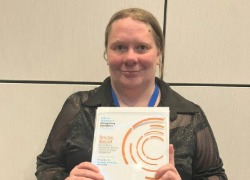 Teesside University recognised with Bronze Engage Watermark
...
Teesside University recognised with Bronze Engage Watermark
... Teesside University researchers working to improve cancer
...
Teesside University researchers working to improve cancer
... Teesside University named Higher Education Partner of the
...
Teesside University named Higher Education Partner of the
...Most read
- Teesside University wins prestigious University of the Year award
- Teesside University appoints next Vice-Chancellor and Chief Executive
- Teesside University professor named among UK’s top tech women
- Groundbreaking Knowledge Transfer Partnership converts construction waste into green economic solutions
- Teesside University leads new research into Roman Empire’s leather economy