How modelling and research partnerships are powering smarter, more sustainable decisions
In an increasingly complex operating environment, organisations are often asked to make high-stakes decisions without full visibility of outcomes. Whether navigating sustainability challenges, optimising healthcare systems or improving industrial processes, internal data and expertise can only go so far. This is where contract research and advanced modelling become powerful enablers of informed, confident decision making.
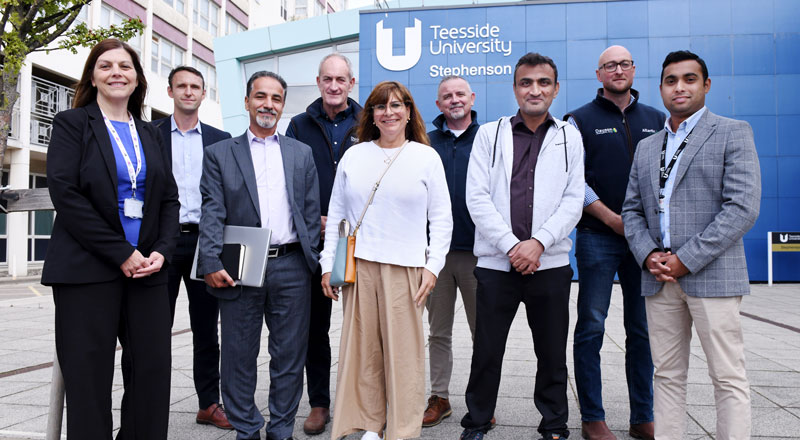
Across sectors, applied research is helping organisations test scenarios, reduce uncertainty and unlock innovation in ways that would otherwise be difficult – or impossible – internally.
Take the construction sector – through a Knowledge Transfer Partnership with Dauson Environmental Group, academic expertise is being used to tackle one of the industry’s biggest challenges: carbon emissions. By modelling material performance and production processes, researchers are supporting the development of ultra-low carbon construction materials derived from waste. This not only helps Dauson move towards a circular, 100% recycling model, but also provides evidence-based validation that these alternatives can meet commercial and regulatory standards.
In the energy sector, Harbour Energy faced a different kind of challenge – how to assess the viability of emerging net zero technologies within a rapidly evolving global landscape. Working with the Net Zero Industry Innovation Centre, the organisation commissioned a detailed market and feasibility assessment of Direct Air Capture (DAC). Using advanced modelling techniques, researchers evaluated economic, technical and environmental factors across multiple countries, including the levelised cost of carbon capture and system efficiency under different energy scenarios. This provided Harbour Energy with a clear, data-driven view of where DAC deployment is most viable, enabling them to prioritise investment and explore pilot opportunities with confidence.
Within the bioeconomy, modelling is also transforming how products are developed and scaled. A collaboration with KP Snacks demonstrates how data-driven process optimisation can deliver both commercial and societal benefits. By analysing variables such as sugar content, washing processes and frying temperatures, researchers were able to model and refine production conditions to reduce acrylamide formation. The result was an 8% reduction in oil content, improved product consistency and a healthier end product – achieved without compromising taste. Crucially, the modelling approach allowed the business to implement changes with confidence, minimising risk to production and quality.
Similarly, a Knowledge Transfer Partnership with MOMA Foods highlights how research can support innovation in fast-growing markets. Faced with increasing demand for sustainable dairy alternatives, MOMA worked with academic experts to optimise its oat milk production process. Through modelling and experimentation, the team refined enzymatic processes to improve texture, taste and performance –particularly for coffee applications. By combining technical insight with locally sourced ingredients, MOMA successfully launched a high-quality product that reduces food miles while meeting consumer expectations, quickly becoming one of its best-selling lines.
What unites these examples is the combination of academic rigour and real-world application. Contract research partnerships provide access to specialist tools, methodologies and independent insight. Modelling in particular acts as a bridge between theory and practice – turning data into actionable intelligence.
For organisations facing uncertainty, the value is clear. Rather than relying on assumption or trial-and-error, they can simulate outcomes, test strategies and make decisions with greater confidence. In doing so, they not only reduce risk but also accelerate innovation and amplify impact.
As industries continue to evolve, the ability to see beyond immediate constraints is critical. Modelling, underpinned by collaborative research, offers exactly that: a way to make smarter decisions today, with tomorrow in mind.