Course overview
Accredited Foundation year Work placement
School of Arts & Creative Industries
See what it's like to study at our School of Arts & Creative Industries.
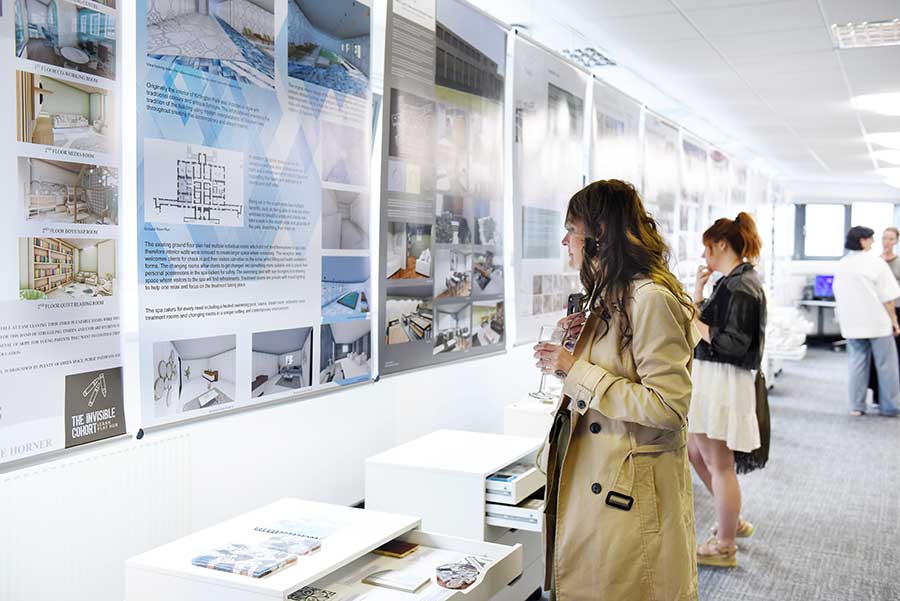
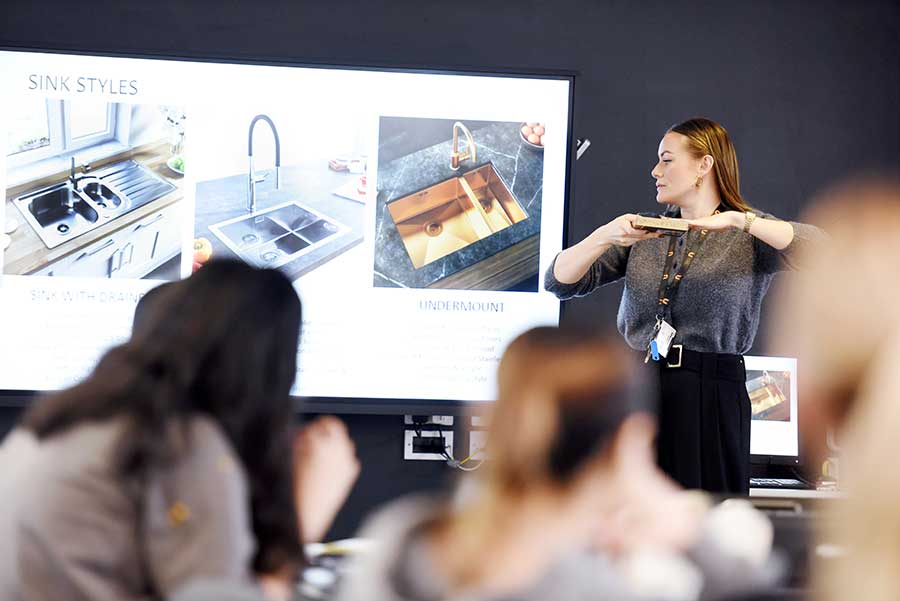
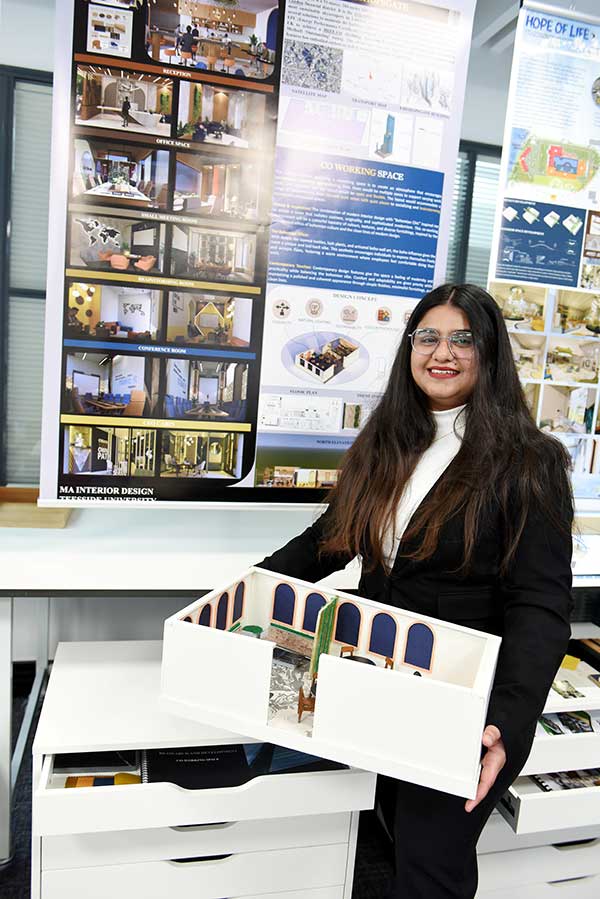
You work in a dedicated design studio environment with access to high quality Computer Aided Design and superb workshop facilities. The course has an outstanding track record for innovative teaching and of supporting students to achieve high grades, You are encouraged to get involved in a wide range of extra curricula activities. These include guest lectures and workshops from both professionals in practice and our successful graduates and alumni now working throughout the world.
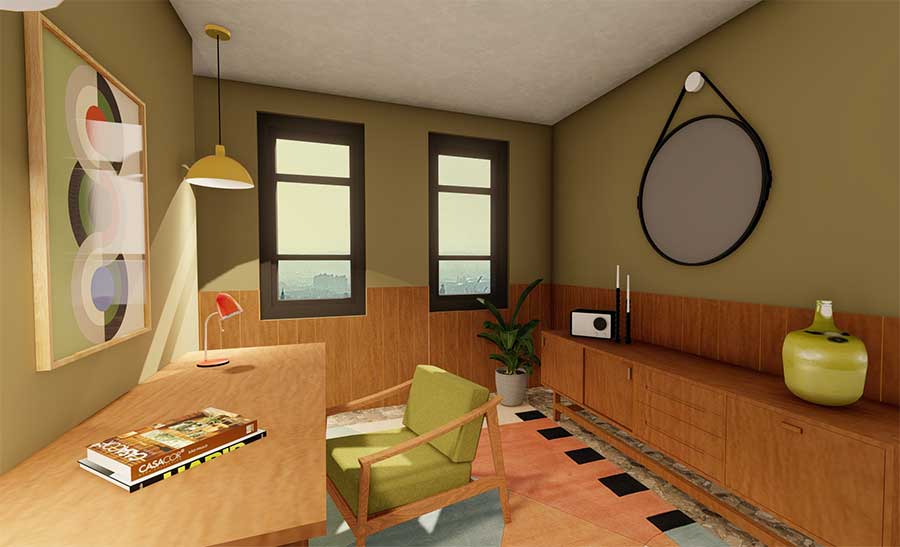
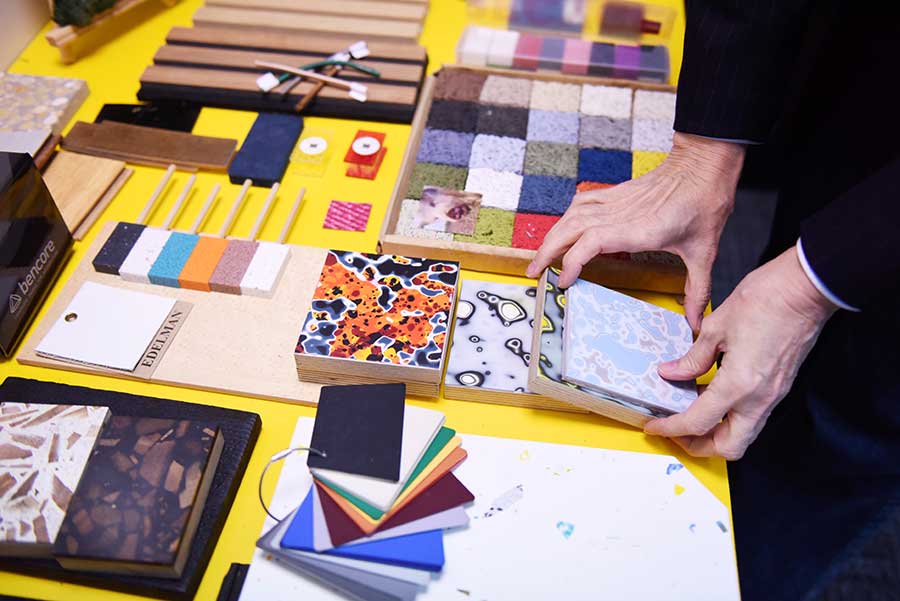
We not only prepare our students to become excellent design graduates but also successful design professionals. Interior Design is an exciting, creative industry involved in the design of stimulating environments for living, working, shopping, commerce, health, education, hospitality and almost every possible human activity. Often based around the conversion of existing buildings, the Interior Designer considers many design matters and factors including; the needs of the building’s end user, creating interior spatial layouts, improving circulation and function, interpreting buildings, space and use. The Interior Designer’s role also embraces the specification of materials, designing bespoke textiles, fittings and furniture and selecting colour palettes and lighting schemes.
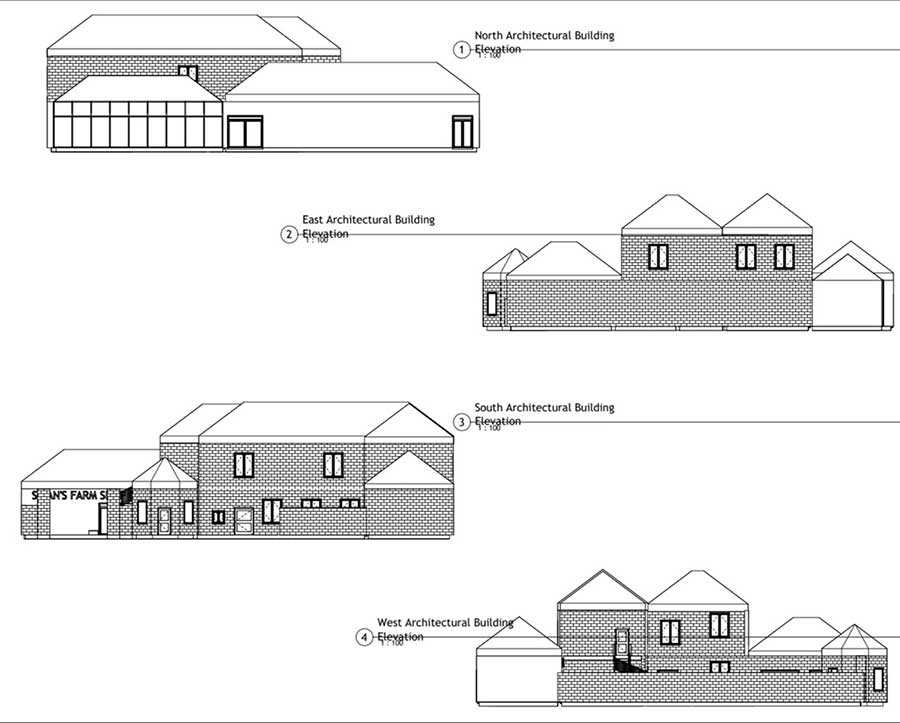
We aim for our students to become creative design professionals and on our course you learn a wide range of skills including; design process and practice, interior decorative arts, trends, fashions and textiles, architectural drawing techniques, 2D and 3D industry standard Computer Aided Design, history of design and architecture plus the essentials of professional practice. These are all applied into your core creative design studio projects.
Projects are designed to replicate professional practice ensuring you are ready for the design profession. As a design student you will have the opportunity to work on live projects with real clients and enter prestigious competitions such as those offered by the Royal Society of Arts.
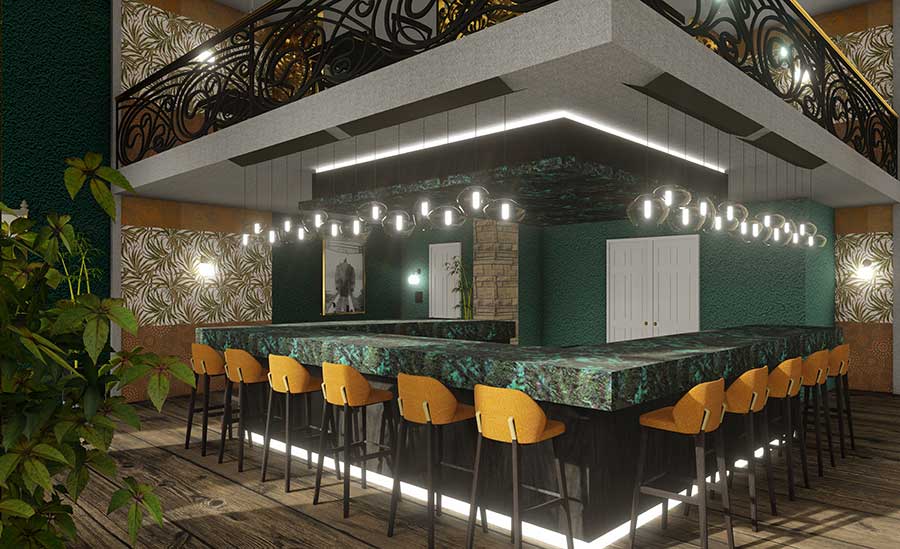
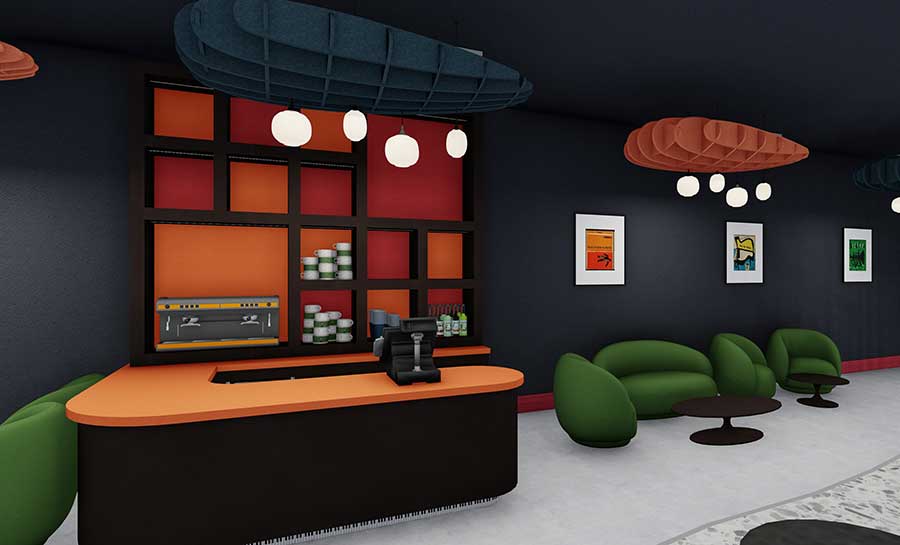
Some recent live briefs have included: working with a national chain to redesign a public house, proposals for a jewellery gallery for Middlesbrough Institute of Modern Art, residential apartment design, specialist hospital provision working to create enabling environments for those with visual impairment, train stations and the experience of travel, and office concepts in collaboration with a major furniture manufacturer.
Top reasons to study interior design at Teesside University:
- Nationally recognised:
- Interior Design is ranked 1st in the UK as part of our Graphic Design subject area ranking. (Guardian University Guide 2024 & 2025, tees.ac.uk/source)
- Teesside University was ranked 9th for Student Satisfaction for Art & Design in the Complete University Guide 2024. (84 institutions were ranked. tees.ac.uk/source)
- 97.6% of design studies students agreed that staff were good at explaining things. (National Student Survey 2024, tees.ac.uk/source)
- Adobe Creative Campus: our courses and campus are powered by Adobe and Apple. We’re Europe’s first Adobe Creative Campus and the only Apple-accredited university. This equips you with the digital tools and resources to transform the creative world. Our courses have a built-in Creative Week – a workshop based, festival style, off-timetable week each semester where you can experiment with new materials, make visits and upgrade your tech skills.
- Work-ready: the course includes short, career-focused modules helping you understand working in the arts and creative industries. You look at how the interior design industry works, how to access it, who shapes it and how to grow within it. From industry leaders’ professional wisdom and insight, to accessing professional opportunities and creative coaching, you become an industry insider and leave with a working understanding of the professional community.
- Industry connected: collaborate with our alumni and network at Middlesbrough Institute of Modern Art (MIMA), our very own international contemporary art gallery. You benefit from supportive voices, specialist expertise, shared wisdom, new ideas, a helping hand or a friendly catch-up, establishing critical relationships that support you in developing your unique creative voice and propel you into your creative career.
Creative UK
 Take advantage of our Creative UK membership and help futureproof your career, with networking events, a resource hub to support professional development, and bespoke workshops in partnership with industry leaders and mentors. Sign up for free student membership to get opportunities, events and newsletters sent directly to your inbox.
Course details
Course structure
Year 1 core modules
Enhance your skills in team-working, communication, project management and negotiation. You collaborate with a group of your course mates to produce a small-scale creative project in response to a subject-specific brief.
This is a 20-credit module.
Introduction to Interior Design Skills and Practice
You learn drawing and drafting for architectural communication, model building techniques, working to scale and historical style and context. Introduction to both two and three-dimensional visual communication allows you to externalise your ideas and communicate your proposals to others. You study the precedents of architectural and interior design history and investigate problem solving and themes that will inform your studio practice. Develop your understanding of the role of the designer, the meanings and vocabulary of design and the relationship between design, society and the environment.
This is a 40-credit module.
Introduction to the Creative Industries
With many opportunities in the creative industries sector, learn how to start on your career path while developing vital employability skills such as networking and digital presence. Understand the structure of the sector and the interdisciplinary relationships between art, design and media. Discover how the sector operates locally, nationally and globally – debating the role of policy and the importance of sustainability.
This is a 20-credit module.
Residential Design and Communication
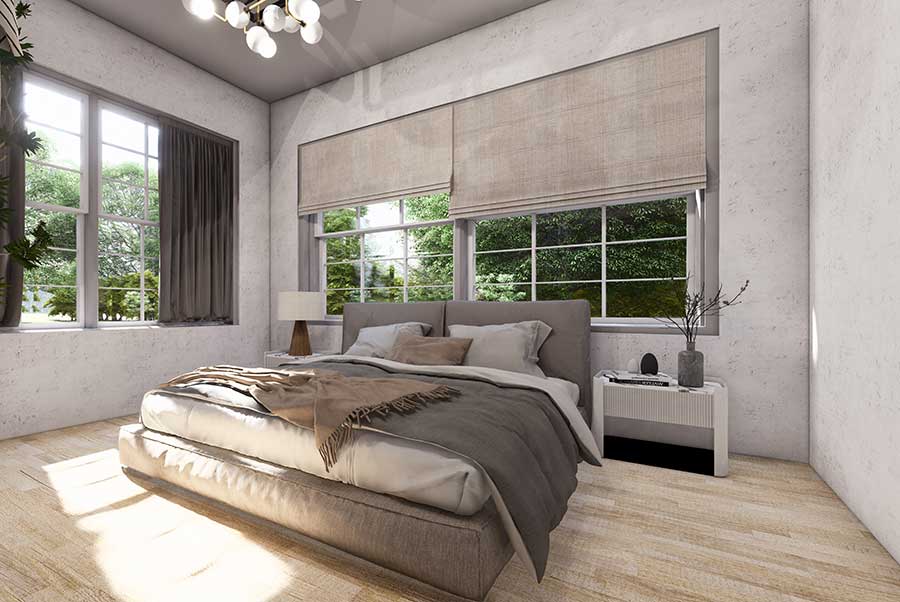
Understand the fundamentals of the interior design process and the complexities of dealing with spatial change within a given building. You study how to work to a residential brief, the client and development of the design process, computer aided design and the application of textile related skills to an interior space. You practice the externalisation of initial ideas through experimentation, working towards finished design proposals.
This is a 40-credit module.
Year 2 core modules
Commercial, Branded Environments and Visualisation
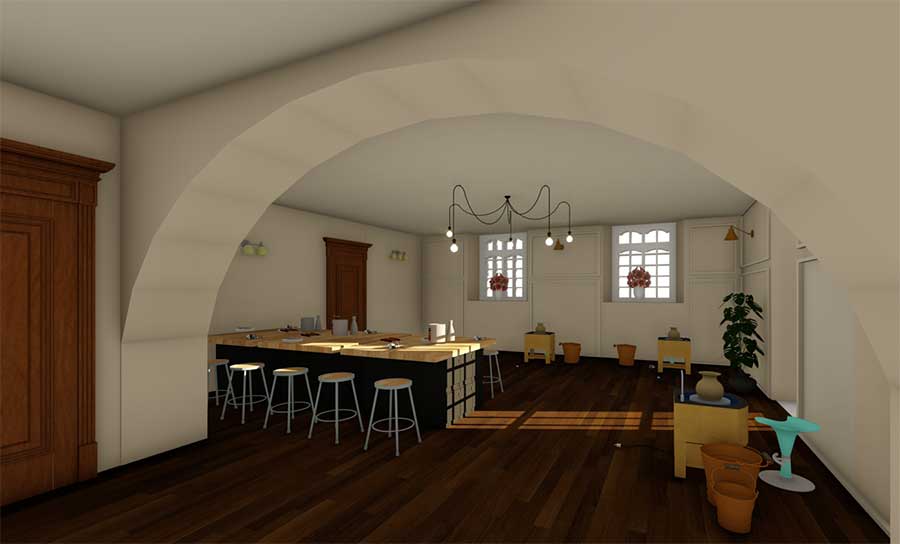
Explore commercial spaces and new landscapes for workspaces, considering client branding, employee health and wellbeing and contemporary debate. You develop your visualisation skills and learn how to use industry standard 3D CAD, SketchUp and Lumion to create client-focused images. Commercial spaces are built to appeal to employees and customers, you study bespoke surface design, interior branding and furniture design to prepare you for this challenge.
This is a 40-credit module.
Develop critical thinking and analysis skills, exploring contemporary issues and debates related to the creative industries. You research a specific area or development within your chosen subject – this may be technical, economic, ethical, legal, cultural, sociological, or a combination. You draw on appropriate academic and industry sources to contextualise your research. You present your topic and initial research within taught sessions, providing an opportunity for peer and tutor feedback.
This is a 20-credit module.
You develop and explore, in depth, a creative industry-based project in your specialist area of design, art, media, music, photography or illustration - relevant to your future professional practice. While forming a professional portfolio of work, you experience real-world business scenarios and challenges, industry competitions and cross and inter-disciplinary activities. You gain skills in project management, applied research methods and collaborative creative work.
This is a 40-credit module.
Working in the Creative Industries
There are many challenges facing contemporary art, design and media practices. You research the social, political or ecological challenges around us to generate a small-scale project. You develop and reflect on your understanding of enterprise in the context of the creative industries. Contextualise your own professional practice and aspirations through application of critical thinking and problem-solving skills.
This is a 20-credit module.
Optional work placement year
You have the option to spend one year in industry learning and developing your skills. We encourage and support you with applying for a placement, job hunting and networking.
You gain experience favoured by graduate recruiters and develop your technical skillset. You also obtain the transferable skills required in any professional environment, including communication, negotiation, teamwork, leadership, organisation, confidence, self-reliance, problem-solving, being able to work under pressure, and commercial awareness.
Many employers view a placement as a year-long interview, therefore placements are increasingly becoming an essential part of an organisation's pre-selection strategy in their graduate recruitment process. Benefits include:
· improved job prospects
· enhanced employment skills and improved career progression opportunities
· a higher starting salary than your full-time counterparts
· a better degree classification
· a richer CV
· a year's salary before completing your degree
· experience of workplace culture
· the opportunity to design and base your final-year project within a working environment.
If you are unable to secure a work placement with an employer, then you simply continue on a course without the work placement.
Final-year core modules
You produce a self-managed, individual extended piece of independent investigation and/or creative production or portfolio of work. Supervised by an academic member of staff, you take responsibility for the planning and execution of the work, including the consideration of associated legal, social, ethical and professional issues. You explore in depth a chosen subject area, demonstrating your ability to analyse, synthesise and creatively apply your learning, showing critical and evaluative skills and professional awareness.
This is a 60-credit module.
Plan and implement your departure from education to your first or new career, or to further study. You continue your creative practice, developing a portfolio and/or extended piece of work which reflects you as a creative. You explore discipline-specific employability strategies, and engage and network with industry to develop key connections.
This is a 60-credit module.
Modules offered may vary.
How you learn
Think, dream and make: learn through doing, with focused studio time for practice-based creative work, exploratory spatial projects allowing you to develop ideas and enable you to undertake larger-scale, more ambitious projects.
Develop your creative voice: you are coached to find and grow your creative voice. Collaboration with industry professionals and your peers gives you new perspectives on developing your practice.
Join the creative sector: our intensive, career-focused modules help you understand working in the arts and creative industries. From industry leaders’ professional wisdom and insight to accessing professional opportunities and creative coaching, you become an industry insider and leave with a working understanding of the professional community.
Become connected: access our network of alumni and practising creatives working in practice and at Middlesbrough Institute of Modern Art (MIMA). Benefit from supportive voices, specialist expertise, shared wisdom and new ideas, establishing critical relationships that propel you into your creative career.
Get creative: take part in MIMA Creative Week, a festival of workshops where you experiment with new materials, go on field trips and upgrade your tech skills.
Expand your horizons: collaborate with our international partners in Prague, Dubai and India becoming international creative citizens while developing an understanding of wider global contexts, sustainability and the changing shape of equality and diversity.
How you are assessed
The work produced is the work assessed; there are no separate written examinations and the use of design projects is a key feature. The process of assessment is undertaken against carefully defined criteria and often involves a critique of project-based assignments - this is a process widely used in the design field and allows for both staff and peer group appraisal.
Our Disability Services team provide an inclusive and empowering learning environment and have specialist staff to support disabled students access any additional tailored resources needed. If you have a specific learning difficulty, mental health condition, autism, sensory impairment, chronic health condition or any other disability please contact a Disability Services as early as possible.
Find out more about our disability services
Find out more about financial support
Find out more about our course related costs
Entry requirements
Entry requirements
Year 1 entry
96-112 points, including a creative subject, from any combination of recognised Level 3 qualifications and a creative portfolio showing skills in your chosen discipline. Digital portfolios are accepted but you are given the opportunity to attend a session on campus to discuss your portfolios with our staff. Consideration is also given to students without formal qualifications but with evidence of practical subject experience at an appropriate level.
Non-EU international students who need a student visa to study in the UK should check our web pages on UKVI-compliant English language requirements. The University also provides pre-sessional English language courses to help you meet the English language requirements.
Helping you meet the entry requirements
We may be able to help you meet the requirements for admission by offering you the opportunity to study one or more Summer University modules, some of which can be studied by distance learning.
Alternative degree with integrated foundation year
If you are unable to achieve the minimum admission requirements for Year 1 entry you could, subject to eligibility, join one of our degree courses with an integrated foundation year.
Direct entry to later years
If you have previously studied at higher education level (for example, a foundation degree, HNC, HND or one or more years at degree level at another institution) you may request direct entry to Year 2 or year 3 of this degree.
Mature applicants
We welcome applications from mature students (aged over 21) who can demonstrate, through portfolio/written work and relevant experience, that they have developed cognitive and technical skills through their life experiences.
For general information please see our overview of entry requirements
International applicants can find out what qualifications they need by visiting Your Country
For general information please see our overview of entry requirements.
International applicants can find out what qualifications they need by visiting Your Country.
You can gain considerable knowledge from work, volunteering and life. Under recognition of prior learning (RPL) you may be awarded credit for this which can be credited towards the course you want to study.
Find out more about RPL
Employability
Career opportunities
You might pursue a career in interior design or as a designer in the retail, exhibition, set design, leisure, surface pattern, merchandising or housing areas, or you might continue to postgraduate study.
Work placement
A work placement officer and the University's award-winning careers service help you with applying for a placement. Advice is also available on job hunting and networking.
By taking a work placement year you gain experience favoured by graduate recruiters and develop your technical skillset. You also obtain the transferable skills required in any professional environment. Transferable skills include communication, negotiation, teamwork, leadership, organisation, confidence, self-reliance, problem-solving, being able to work under pressure, and commercial awareness.
An increasing number of employers view a placement as a year-long interview and, as a result, placements are increasingly becoming an essential part of an organisation's pre-selection strategy in their graduate recruitment process.
Potential benefits from completing a work placement year include:
- improved job prospects
- enhanced employment skills and improved career progression opportunities
- a higher starting salary than your full-time counterparts
- a better degree classification
- a richer CV
- a year's salary before completing your degree
- experience of workplace culture
- the opportunity to design and base your final-year project within a working environment.
Information for international applicants
Qualifications
International applicants - find out what qualifications you need by selecting your country below.
Select your country:
Useful information
Visit our international pages for useful information for non-UK students and applicants.

 BA (Hons) Interior Design and Architecture
 BA (Hons) Interior Design
 BA (Hons) Interior Design
 Interior design graduate improving homes in television debut
 National competition success for Teesside University design teams
 Teesside University student designers’ creation showcased on national television