
Course overview
Accredited Foundation year Work placement
You develop the skills to design and maintain advanced measurement and control systems, and learn how these are applied to multimillion-pound chemical and manufacturing plants.
Top reasons to study instrumentation and control engineering at Teesside
- Scholarships: you may be eligible for a number of scholarships and awards.
- Maths support: develop your understanding in maths with our free online Mathematics for University course.
- Industry experience: get a foot on the career ladder and gain experience of working in the sector with an optional year in industry.
- International visits: you have opportunities to travel internationally through student mobility visits or spending a semester studying abroad with one of our partners in countries such as China, the Czech Republic, Spain and Malaysia.
Course details
Course structure
Year 1 core modules
This module gives you a basic understanding of the physical fundamentals used in electrical engineering, together with specific techniques you need to determine the behaviour of electric circuits.
We cover the fundamentals of electrical circuit theory, analysis of electrical circuits, give you an understanding of simple analogue and digital circuits and an appreciation of their application to engineering problems.
We look at voltage, current, power, energy, resistance and impedance. Also magnetic fields and inductance, electric fields and capacitance, Kirchhoff’s Laws. We examine time varying voltages and currents, effects on inductors and capacitors, sinusoidal voltage and current use of symbolic notation.
You also study power, reactive power and apparent power, circuit analysis techniques, mesh and nodal analysis, transistors and properties of amplifiers.
Our primary method of teaching is lectures supported by laboratory sessions, tutorials, problem solving and directed learning.
You learn how to:
- understand and use key elements of electrical and electronic theory
- apply given tools in the solution of well defined electrical and electronic engineering problems
- apply numerical skills to simple electrical and electronic engineering problems
- use basic IT tools and specialist software to solve simple electrical and electronic engineering problems.
You develop an understanding of digital and analogue electronics. And focus on important components, operations and circuits. You explore theoretical principles and conduct laboratory exercises using expert equipment.
This is a 20-credit module.
This module introduces the range of mathematical skills that are relevant to an engineering degree. You revisit and develop your knowledge of the fundamentals of algebra, trigonometry and basic statistics. The central ideas of vectors, matrices, complex numbers, and differential and integral calculus are also examined.
Throughout the module you develop a range of mathematical skills and techniques fundamental to the solution of engineering problems. You also advance your skills in selecting and applying mathematical techniques.
This module is delivered through a combination of lectures and tutorial sessions.
You develop and enhance the practical, professional and electrical engineering skills necessary for success in both the academic and work environment. There is a significant practical element which enables you to develop your knowledge, confidence and the fundamental principles of electrical engineering design methods and laboratory practice. You are also introduced to the skills required to improve opportunities in career selection and development through exposure to a range of on-campus services and external professional bodies.
The practical sessions include: health and safety, equipment selection, component selection, circuit construction, measuring instruments, testing and fault diagnosis.
This module provides you with an introduction to instrumentation, through studying the principles and characteristics of measurement systems and elements, and their underlying physical principles.
On successful completion of this module, you will be able to:
- gather record, describe and evaluate sensor and system data from a variety of sources
- demonstrate practical ability in carrying out experimental physical measurements, within defined contexts in areas relevant to physics and instrumentation
- present written evidence to demonstrate understanding of experimental investigation of underlying physical principles of measurement sensors and systems.
You will be assessed on an exam, system design exercise and laboratory report.
You focus on the implementation of systems for both programmable logic controllers (PLCs) and embedded systems. PLCs are used to explain theory, to discuss applications and to cover practical aspects of programmable logic controllers and lead to the design of a control system for an industrial process. Embedded systems are explained by using their industrial applications and practical programming applications using a microcontroller-based system. You work in teams to solve an industrially-relevant real-time embedded system application.
Year 2 core modules
The module encompasses the theoretical and practical aspects of modern digital and industrial communications systems and protocols. The module provides the principles of the design, analysis and practical implementation and industrial use of digital, serial, wired and wireless communication systems. The module also introduces practical industrial communication protocols and information management systems.
Instrumentation and Control Design and Implementation
The module will provide students with the opportunity to work in teams in order to solve an industrially relevant instrumentation and control design problem. In the course of this module students will develop employability skills such as project management, presentation of work, interview techniques, CV writing research and commercial awareness.
The module is designed to develop the students understanding of the specialised area of design in Instrumentation & Control Engineering, and the application of these techniques to the solution of real world problems.
Team working techniques and considerations will be explored and developed to enhance the students’ interpersonal skills.
Delivery will be via lectures and IT laboratories in which students can develop their practical skills.
Assessment will be a group design project (100%) based on an industrial case study.
Integral Transforms and Matrices
You deepen your mathematical knowledge in key areas to use in a number of techniques to solve problems that arise in engineering domains. You develop competence in identifying the most appropriate method to solve a problem and its application.
You are introduced to the techniques and principles, and you are provided with problems that develop your competency in applying these techniques. You are shown how to implement numerical methods using software techniques.
You will develop a thorough understanding of time-domain and frequency-domain representations of signals and systems, and how to apply these ideas to engineering problems.
You will develop the necessary knowledge and techniques to create dynamic models of engineering systems.
We give you the knowledge and techniques for creating dynamic models of engineering systems and to apply computer-aided methods of analysis and design, plus use data acquisition systems for laboratory investigations.
We examine modelling and simulation, linear time-invariant systems, first and second-order systems, frequency response, poles and zeros, basic concepts of control, alternative control methods, fourier analysis and filters.
In lectures we explaina principles and discuss applications then give you a guided solution of relevant examples in tutorials.
In the laboratories you work in groups of up to three on a small engineering plant. You are expected to produce a model and carry out tests to establish parameters. This process enhances the theoretical work carried out in other parts of the module.
You learn how to:
- demonstrate a detailed knowledge of aspects of linear systems and control
- critically analyse a variety of ideas, contexts and frameworks associated with linear systems and control
- apply, question and relate appropriate knowledge and concepts to a range of activities
- identify key areas of problems and choose appropriate tools and methods for their resolution in a considered manner
- use the industry-standard software MATLAB SIMULINK for simulation and design of signal processing and control systems
- apply mathematical techniques to analyse and model signal processing and control systems.
This is a 20-credit module.
Measurement systems is a module for students majoring in Instrumentation and Control engineering. This is one of modules which distinguish you from those who are on other courses.
From this module, you will learn to analyse the performance of measurement systems including the steady state and dynamic characteristics of a measurement system or an element. You will study principles of a wide range of sensing techniques and measurement systems.
A complete measurement system may include sensing element, conditioning circuit, signal transmission and signal display (presentation). All these elements comprise the full contents of this module. Besides, the noise and interference reduction techniques and protections including intrinsically instrumentation are important to instrumentation engineers. You will also touch these topics
Measurement and control is vital in process industries. This module introduces key elements in control and monitoring systems, for example measurement elements. Application of instrumentation can be found everywhere, from domestic water and gas systems to the NASA space station.
You discover constituents of measurement systems, sensing element (primary and secondary), signal conditioning, signal processing, display (data presentation) and static characteristics of sensors.
The module is divided into lectures, tutorials and practicals.
You will learn:
- to demonstrate a detailed knowledge of the principles and characteristics of different sensors
- to critically analyse the characteristics of system elements and their effect on system error
- to understand the effects of noise and interference and methods of reduction
- to employ a balanced logical and supported argument in the selection and analysis of sensor system
- to apply numerical and statistical skills in the analysis and selection of measurement systems.
This is a 20-credit module.
Multidisciplinary Software and Systems
This module introduces C++ programming with an emphasis on the learning, development and application of algorithms and data structures within an engineering context. The students will be introduced to the basics of class-based object-oriented programming using the C++ language.
Students will be required to demonstrate conceptual understanding and practical competence of programming by designing and implementing solutions to specific programming problems.
The module is taught with lectures, labs and related practical work. Lectures will provide an explanation of theory and demonstrations of programming examples. Lab sessions will provide you an opportunity to develop programming skills through the use of practice exercises.
The module is assessed by a report midway through the course and a group programming task at the end of the module period.
Optional work placement year
You have the option to spend one year in industry learning and developing your skills. We encourage and support you with applying for a placement, job hunting and networking.
You gain experience favoured by graduate recruiters and develop your technical skillset. You also obtain the transferable skills required in any professional environment, including communication, negotiation, teamwork, leadership, organisation, confidence, self-reliance, problem-solving, being able to work under pressure, and commercial awareness.
Many employers view a placement as a year-long interview, therefore placements are increasingly becoming an essential part of an organisation's pre-selection strategy in their graduate recruitment process. Benefits include:
· improved job prospects
· enhanced employment skills and improved career progression opportunities
· a higher starting salary than your full-time counterparts
· a better degree classification
· a richer CV
· a year's salary before completing your degree
· experience of workplace culture
· the opportunity to design and base your final-year project within a working environment.
If you are unable to secure a work placement with an employer, then you simply continue on a course without the work placement.
Final-year core modules
You develop an understanding of the principles and technology of analytical measurement systems. Within this, limitations of accuracy are studied along with operational requirements of analytical sensor elements.
This module also investigates the recent generations of sensor systems based on microprocessor systems, application-specific integrated circuits and microcontrollers.
Using relevant industrial examples, smart sensors are analysed and synthesised using modern programming methods and up-to-date devices.
Explore the control system design techniques for Single Input Single Output (SISO) continuous systems using classical control theory and state space methods.
You develop practical techniques of creating and simulating linear and dynamic models, and provided with an introduction to non-linear systems and models.
Digital Control and Instrumentation
You investigate discrete-time computer-based control systems, digital control and signal processing, instrumentation, industrial informatics and related components and software.
You explore industry-based applications in control, digital signal processing and instrumentation. -You use industry-standard software to develop skills and investigate complex problems in control system design.
This module extends the development of independent learning skills by allowing you to investigate an area of engineering or technology for an extended period.
You receive training in writing technical reports for knowledgeable readers and you produce a report or dissertation of the work covered. In addition, you give an oral presentation, a poster presentation or both. The topic can be in the form of a research project or a design project.
You develop key skills in research, knowledge application and creation through keynote lectures where appropriate and self-managed independent study. Support is provided through regular tutorial sessions.
Sustainable Systems and Industry 4.0
The emergence of Industry 4.0, often referred to as the fourth industrial revolution, has been attributed to advancing automation, decentralisation and system integration and cloud computing. In the cyber-physical environment, machines can communicate, collect information, and make informed decisions through artificial intelligence (AI), big data and industrial internet of things (IIoT). The evolution of Industry 4.0 has great potential to improve the energy, equipment, and human behaviour. At the same time, in the era of the so-called circular economy, industry across all sectors is under huge pressure to make their manufacturing operations ethical and sustainable. Therefore, we must learn to adopt or implement the latest Industry 4.0 technologies.
The term sustainability has a multi-disciplinary use and meaning. As future engineers you will learn sustainability is represented as the synergy between environment, economics, and society. In this module students specialising in Sustainable Systems and Industry 4.0 will focus their studies and deepen their knowledge in a range of sustainability themes such as energy management and power systems, sustainable water and wastewater systems, sustainable transportation technologies, transitions to sustainable food systems and mechanical manufacturing systems.
The subjects will be taught through a combination of lectures and seminars. Lectures will develop key concepts and knowledge. Seminars will allow more focused examinations of important issues and approaches
Modules offered may vary.
How you learn
You learn through lectures, seminars and hands-on lab sessions. You are also expected to undertake self-guided study time to review lecture notes, prepare coursework assignments, work on projects and revise for assessments.
How you are assessed
You are assessed through coursework assignments, project reports, lab reports, presentations and formal exams.
Our Disability Services team provide an inclusive and empowering learning environment and have specialist staff to support disabled students access any additional tailored resources needed. If you have a specific learning difficulty, mental health condition, autism, sensory impairment, chronic health condition or any other disability please contact a Disability Services as early as possible.
Find out more about our disability services
Find out more about financial support
Find out more about our course related costs
Entry requirements
Entry requirements
96-112 points including maths, from any combination of acceptable Level 3 qualifications. Examples include A-level, BTEC, Access to HE Diplomas, Scottish and Irish Highers, T-Level, or the International Baccalaureate.
We accept the following T-Levels:
- Design and Development for Engineering and Manufacturing
- Design, Surveying and Planning for Construction (specialism Civil Engineering)
- Maintenance, Installation and Repair for Engineering and Manufacturing from City & Guilds.
Find out how many points your qualifications are worth using the UCAS tariff calculator.
Accredited prior learning
You may be able to join onto year two or three if you’ve studied a HNC or HND. If you don’t have a qualification but have gained relevant credits at Level 4 in a related subject, then credit transfer may be possible.
Alternative routes into this course are available if you have not met the entry requirements as listed.
International students who need a student visa to study in the UK should check our international web pages on acceptable international qualifications and UKVI-compliant English language requirements.
For general information please see our overview of entry requirements.
International applicants can find out what qualifications they need by visiting Your Country.
You can gain considerable knowledge from work, volunteering and life. Under recognition of prior learning (RPL) you may be awarded credit for this which can be credited towards the course you want to study.
Find out more about RPL
Employability
Career opportunities
Instrumentation and control engineers contribute to almost every area of modern manufacturing, service and financial industries. Our graduates are working across the world for a range of industrial and contracting companies including ABB, BASF, BNFL, Honeywell, Tioxide, Petrofac, Sabic and INEOS.
Information for international applicants
Qualifications
International applicants - find out what qualifications you need by selecting your country below.
Select your country:
Useful information
Visit our international pages for useful information for non-UK students and applicants.
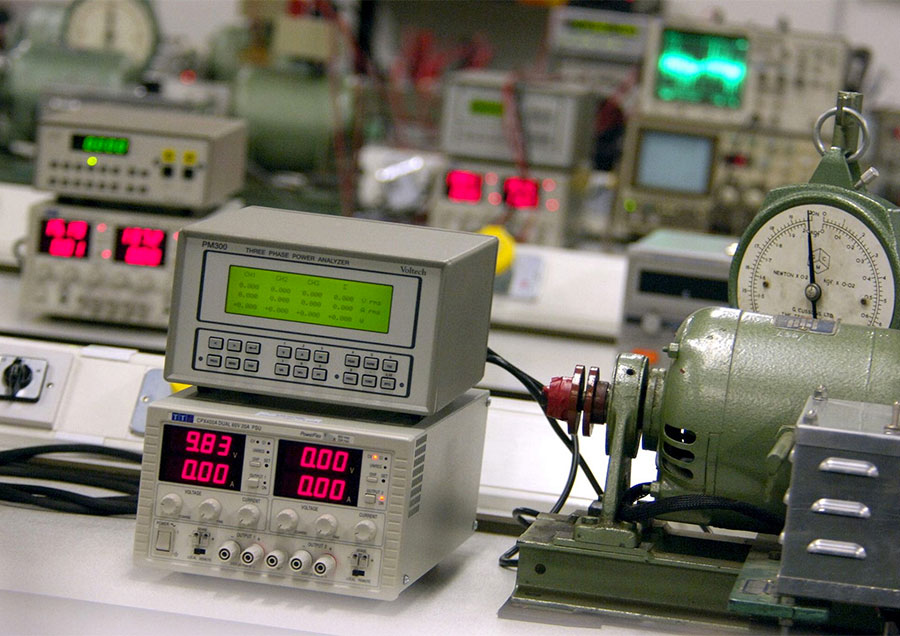
 BEng (Hons) Instrumentation and Control Engineering