Engineering

Teesside is a major international centre for the chemical and process industries and is home to some of the most advanced pharmaceutical and biotechnological companies in the world. The North East region also hosts major international automotive, aerospace, engineering design and civil engineering industries, as well as a growing number of companies involved in renewable energy.

We enjoy close links with these industries, many of which are involved in the design and delivery of our courses to ensure these meet the demands of the workplace. This makes Teesside University well placed to provide a suite of engineering degrees relevant to today's employers.

At Teesside University our focus is on your career path, not just your graduation day. Our core objective is to develop our students into ‘employment-ready’ graduates, able to compete for employment positions with the very best graduates being produced by universities in the UK and overseas.

Incorporated into our programmes is the best practice from across the world in developing the very best engineers. We emphasise team projects, problem solving and case study exercises. Our curriculum blends theory and knowledge in the context of business, society and the environment – all necessary in developing the skills employers value most.

Factfile
Engineering
  • Study in the heart of one of the UK's most important engineering regions on a course developed in close collaboration with industry
  • Qualify with a professionally accredited engineering degree
  • Get involved in real-world case studies and paid practical work placements
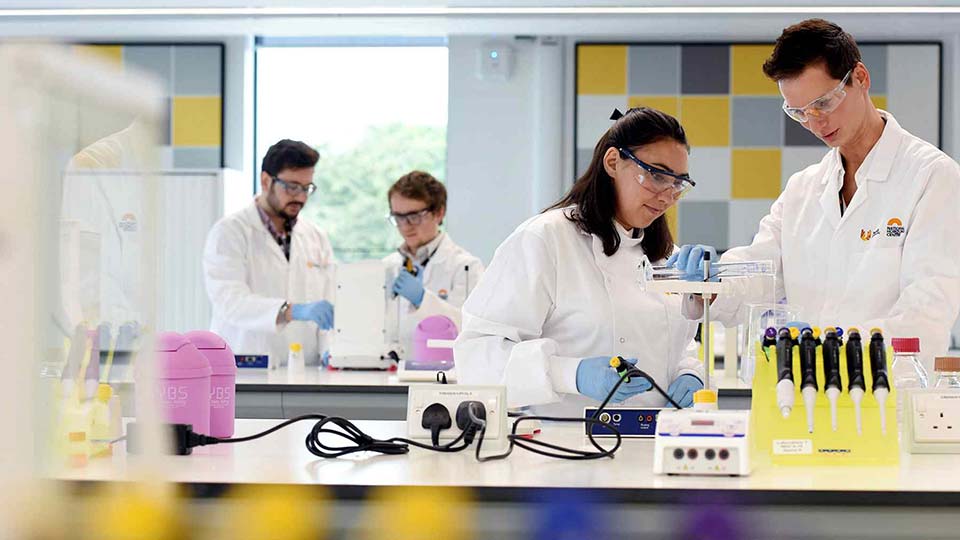
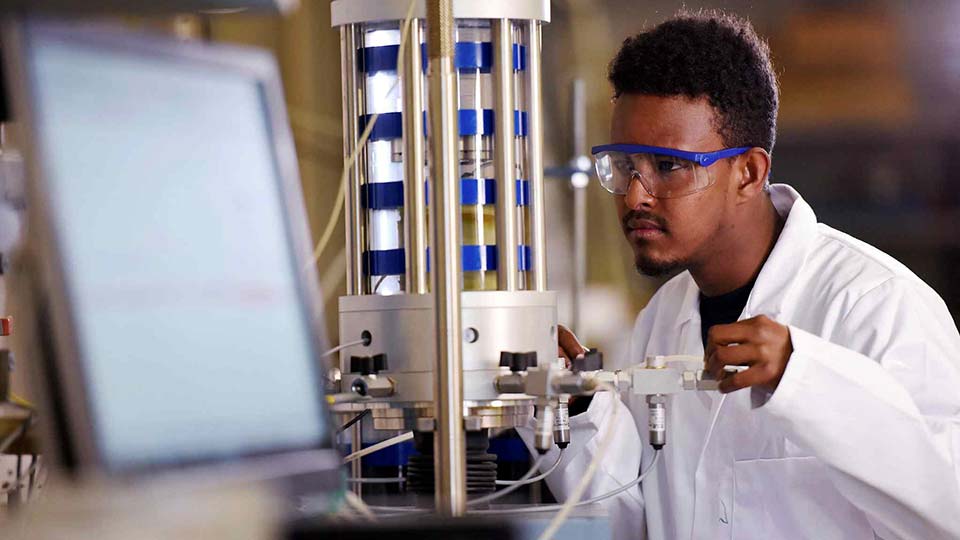
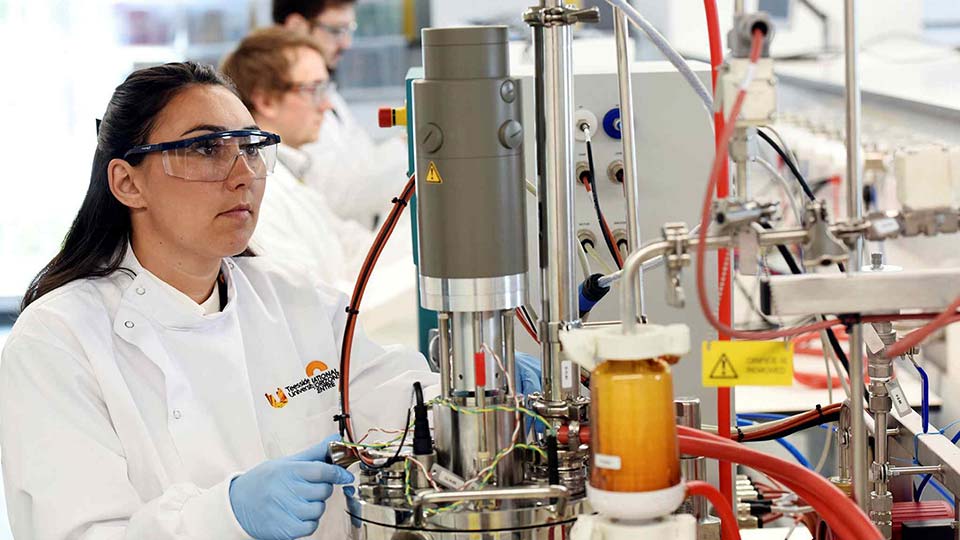
  • Experience our hands-on practical exercises using our specialist state-of-the-art engineering laboratories

Engineering

In addition to the usual year-long work placement schemes offered by most universities, we have introduced an innovative professional mentoring scheme providing you with the opportunity to team up with a professional engineer outside the University. This provides a direct link to commercial engineers, industry and employment experience.

At Teesside University in each year of study you will be part of a medium sized cohort of students, in many cases typically 20 – 60 depending on the degree programme you have chosen. And your laboratory group and tutorial group sizes in many cases are even smaller enabling staff to give individual attention. We emphasize a student-focused approach to teaching, providing support and guidance tailored to each individual student. Our friendly staff are approachable and helpful, enabling you to reach your full potential. The core philosophy behind all our engineering courses is our aim to ‘develop the problem solvers, innovators and leaders of the future’.

Accreditation

Accreditation is a mark of assurance that an engineering degree meets the standards set by the Engineering Council in the UK Standard for Professional Engineering Competence (UK-SPEC). An accredited degree will provide you with some or all of the underpinning knowledge, understanding and skills for eventual registration as an Incorporated (IEng) or Chartered Engineer (CEng). Some employers recruit preferentially from accredited degrees, and an accredited degree is likely to be recognised by other countries that are signatories to international accords.

Accreditation is carried out by the individual professional engineering institutions under licence from the Engineering Council. A degree may be accredited by more than one engineering institution, particularly where it spans several engineering disciplines.

The minimum academic requirement for accreditation to Chartered Engineer status is a Master’s level qualification. This can be either a MEng (Hons) award or a BEng (Hons) award and an approved postgraduate MSc award.

Teesside University offers undergraduate programmes that lead to either a BEng (Hons) or MEng (Hons) award, as well as a number of accredited postgraduate MSc programmes. The MEng programmes build upon the BEng programmes by incorporating additional modules which provide a broadening of knowledge in peripheral subjects and also deeper level of knowledge and understanding in core technical subjects. Teesside MEng programmes also include management and leadership skills to equip our graduates with the attributes needed to become leaders in their chosen fields. The flexible structure of our programmes allows you to transfer between BEng and MEng programmes up to the end of your second year of study.

Each one of Teesside University’s engineering degree courses is accredited by at least one relevant professional body, and our policy is to seek professional accreditation for any new courses which are introduced from time to time.

Engineering

Excellent prospects

From the curriculum of our courses to our professional mentoring scheme, everything is designed to produce highly employable graduates for a career in a range of engineering, industrial and contracting companies. In addition to theoretical and technical knowledge, you gain practical experience plus a range of transferable skills, including communication, management, analytical and IT skills.

The latest available (2010/11) Destinations of Leavers from Higher Education employability data for Teesside University engineering graduates showed the following percentages^ in work or further study within six months from graduating:
Chemical Engineering (degree): 90%
Civil Engineering (degree): 81%
Electrical and Electronic Engineering (degree): 94%
Instrumentation and Control Engineering (degree): 100%
Mechanical Engineering (degree): 100%
(Aerospace Engineering courses will produce the first graduates in 2015)

^ The percentages shown here are actual results from respondents who graduated from the named courses in 2011 and may differ from KIS data which sometimes aggregates data across several years and different courses.

Engagement with industry and employers

The School of Science and Engineering places great emphasis on engagement with industry and employers, and this takes place at all levels including at undergraduate level. All our courses offer students the opportunity for a year-long work placement. We encourage our students to consider this option as it adds great value to their skills set, but students who do not wish to take a year out can still benefit from our (probably) unique Professional Mentoring Scheme.

If you participate in our innovative professional mentoring scheme you will gain a head start towards a successful career. By linking undergraduate students to successful practising professionals, scientists and engineers, our professional mentoring scheme helps you gain a clear understanding of the needs of employers. This ensures that you identify and develop the skill sets and attributes you will need in order to be successful in your chosen careers.

Whichever course you choose, you can forge links with industrial companies, especially if you undertake an industrial professional training year. We can help you find sponsorship, industrial professional training or an industry-based final-year project.

First-class facilities

You'll study in a purpose-built, high-quality learning environment. Alongside seminar rooms and a 200-seat lecture theatre there are specialist engineering laboratories. These include designated areas for aerospace and aeronautical engineering, civil engineering and the built environment, computer-aided design and manufacture, control systems and automation, electrotechnology and telecommunications. In addition there are specialist pilot plant facilities for chemical and mechanical engineering on the University site.

A new nanotechnology facility allows typical semiconductor processes such as photolithography, and material deposition and etching techniques to be carried out in a controlled environment. Other microfabrication systems are integrated into the facility, together with atomic force microscopy equipment.

Research and enterprise

Research and innovation is carried out within the Technology Futures Institute with areas of focus that include process innovation, engineering and technology management and sustainability. We generate annual income in excess of £2m for this activity. In the 2008 Research Assessment Exercise, 80% of our engineering research activity was judged to be at international level, with the remainder being nationally recognised. A substantial 25% of our international-level research was rated as being internationally excellent.